[00:00:00] Intro: Welcome to Private Banking Strategies Podcast with Vance Low and Seth Hicks, your secret weapon to protect your assets and never have to start over financially again. Vance and Seth help high net worth individuals, families, business owners, and investors, structure and asset protected tax-free fortress for their families.
[00:00:21] Intro: Learn how to keep what you earn and use the velocity of money. To create your own private banking system. Join us on this journey as we explore the secret strategies of the rich and political elite and help you take total control of your financial security now onto the show.
[00:00:48] Host: Welcome back to another episode of Blockhouse Exploring the Blockchain today with Seth Hicks, the COO, correct COO of private banking strategies here to talk about the private banking sector [00:01:00] and work crypto fits into this and you know, what are some of the intersections that could be really important that people need to know about.
[00:01:06] Host: So we’re gonna have a long conversation about that today. Seth, welcome to the show, man.
[00:01:10] Seth Hicks Esq.: Hey, thank you Brandon. I’m really grateful that you’ve invited me on, and glad to be here, man, to join our discussions off air and looking forward to bringing some value to your audience.
[00:01:20] Host: Yeah, likewise. I’m very excited to have this conversation with you.
[00:01:23] Host: I think it’s gonna be a real good one. Before we, you know, jump into it, tell us a bit more about yourself. I’m sure people would love to know about your background, you know, how you kind of wound up doing what you’re doing. Now we can see all your accolades in the background, so obviously you’re well versed, well studied at what you do.
[00:01:38] Seth Hicks Esq.: Yeah. Thank you. Well, I went to law school after playing competitive sports in college and had a traditional legal background, practiced in a large law firm doing real estate transactions, and then spun out into my own boutique law firm where. Did both, uh, commercial business litigation and commercial [00:02:00] transactional work.
[00:02:00] Seth Hicks Esq.: So helping people structure, you know, restaurant acquisitions, real estate, uh, development, uh, and then also litigating those, uh, disputes on occasion when, when they would arise. So it got kind of both sides of the coin from putting deals together and then also litigating those issues. Pretty much a traditional story of legal practice in that sector.
[00:02:22] Seth Hicks Esq.: I operate with family owned businesses, small business offices and such. And then I, you know, I guess I’ll fast forward to when I, I met my partner Vince Lowe, in private banking strategies through a client that I, that I represented. And he said, Hey, you’ve gotta learn about private banking strategies. And as I started to.
[00:02:43] Seth Hicks Esq.: Peel back the layers of private banking strategies. I was just blown away that I had never come across it before. Understand how valuable it was and what I already did. Um, because one of the main things I help people do as a lawyer is keep what they make. You [00:03:00] know, you want to avoid risk, mitigate risk, and you want to be able to capture opportunities.
[00:03:05] Seth Hicks Esq.: So there’s some. There’s some tools in the private banking strategies world that are unique to that universe, and they are unknown to most people. So when I began to discover those, I, I, I really locked onto it like a, like a dog on a bone. And I mean, I guess the rest is history. So now I incorporate that in with the structures for clients that I represent.
[00:03:32] Seth Hicks Esq.: Help them keep what they make, help them take advantage of the, of the laws that are available to them, help them stay financially private and all of those type of things. Very cool. How long have you been doing it for? I’ve been practicing law for about 25 years. 25. Oh wow. Quite a long time. 25 years. Yeah.
[00:03:50] Seth Hicks Esq.: I, my wife tells me I’m, I’m look much younger than I am, so I appreciate her, her
[00:03:56] Host: career. I wouldn’t have expected 25. You look great.
[00:03:59] Seth Hicks Esq.: Thank you. [00:04:00] I, I, you know, it’s personally, I mean, I like to exercise. I like to be outdoors and fish. I’ve, I’ve got a family, I’ve got six kids. Mm-hmm. Uh, that range from eight to two months.
[00:04:11] Seth Hicks Esq.: And so they keep me young and following them around, chasing them around keeps you, keeps you young. Yeah. You mentioned you played sports in college, right? Yeah, sure did. I played soccer. Yeah, I played soccer. Mm-hmm. At an NAI school that competed for a, a national championship pretty much every year for about 30 years.
[00:04:31] Seth Hicks Esq.: And so enjoyed that quite a bit. And I actually, some of my friends, they went on to play professional and I thought, well, you know, they were making 30, 35,000 bucks a year living in hotels. And I thought, should I do that or. Go to law school and so I opted for law school.
[00:04:48] Host: No, no law school. That’s, it’s probably smart opting for law school, I guess.
[00:04:52] Host: So many different career options can go down.
[00:04:54] Seth Hicks Esq.: Yeah. But Brandon, I went to law school at Pepperdine, which is in Malibu. Mm-hmm. So you ever been to [00:05:00] Malibu? I have. It is very beautiful. That’s the only place you need to go. It was, that’s the final destination. So I. You know, enough said when you’re, when you’re in the, the coast and on the beach and the school actually overlooks the, the beach, so you sit out there and you’re like, mm-hmm.
[00:05:18] Seth Hicks Esq.: This feels like paradise. Why would I want to go anywhere else or live out of hotels? I don’t, I don’t think so.
[00:05:24] Host: That sounds nice. It’s awesome. Very cool. Tell, so tell me more about the pr about private banking strategies. What, what about that? Struck interest with you as a career path to go down and focus on.
[00:05:40] Seth Hicks Esq.: Sure. Well, there’s some fundamental values and benefits of private banking strategies, and one of the first fundamental pillars that we like to discuss is asset protection and asset protection, especially in the legal counsel influence, you’re, you want to [00:06:00] protect your clients. So there’s asset protection tools within private banking strategies that.
[00:06:06] Seth Hicks Esq.: Completely blew my mind that I wasn’t aware of. For example, the private banking strategies contracts that we use protect your cash value, whereas other traditional means of storing fiat cash, they don’t protect your cash value. And then of course, everyone wants to. Take advantage of the tax laws that are available to them.
[00:06:29] Seth Hicks Esq.: And with these particular contracts that we structure in private banking, there’s an internal revenue code section that provides the, the money in and the money out. And all the uses that you have in your own private banking system are not taxable events. So those are two main pillars. I mean, there’s a number of pillars that we can discuss, but I’d say those are the main two that captured my initial attention.
[00:06:55] Seth Hicks Esq.: And at first I was somewhat skeptical that the [00:07:00] purported values were actually there and had to dig through, roll up my sleeves and actually convince myself that it is, and now, you know, after utilizing the tools and it’s, you know, there’s nothing like it. There’s no safer place for your money. There’s no safer place for it to grow.
[00:07:17] Seth Hicks Esq.: And ultimately there’s no risk. So I’ve never been. A big equities person where people, you know, they, they purport to make 30% in a particular investment year over year. We don’t see that. My, my partner Vance, is a 40 year wealth manager and he managed traditional stock and portfolios and is, is really keen at pointing out the, the way that those numbers are misrepresented and the risk that really.
[00:07:46] Seth Hicks Esq.: Comes back to lie upon the investor and the client. Contrast that with the private banking strategies, and there is no risk. Your value never goes backwards In, in a private banking [00:08:00] strategies contract,
[00:08:01] Host: how many private banking strategies pillars do you have in place?
[00:08:07] Seth Hicks Esq.: We’ve got, there’s seven, seven fundamental pillars that we like to focus the conversation on, and I, I’ll just run down through ’em.
[00:08:14] Seth Hicks Esq.: So we’ve got asset protection, which I mentioned.
[00:08:16] Outro: Mm-hmm.
[00:08:17] Seth Hicks Esq.: We’ve got a tax free economy. So you’re, you’re working within a tax free system when you put money in and it grows compounds year after year. That’s not a taxable event. And then unlike a 401k. Or a 4 0 3 B or any other type of government qualified retirement plan where you can’t get your money out without penalty.
[00:08:39] Seth Hicks Esq.: You can pull your money in, put it in, and take it out without any taxable event, no penalties. It’s simply a matter of telling the, the insurance company where you want them to wire your money, and you can use that money for investment purposes like crypto. Or you can use that money for a real estate investment.
[00:08:58] Seth Hicks Esq.: You can use that money for any [00:09:00] purpose you want. There are no limitations. It’s your money and you can. Pull it out and put it back in as you, as you please. Then one of the other main pillars that we structure for clients is the financial privacy. Unlike, I don’t know if you’ve ever tried to take cash out of the bank in, you know, a domestic big box bank, but you go and let’s say you want $10,000 in cash for whatever reason, you’re gonna go buy gold or silver at the metal shop or whatever you want.
[00:09:28] Seth Hicks Esq.: Whatever you want. Yeah. Just, you just want, it’s your money. It’s your money, you know? Mm-hmm. Well, the bank may have an issue with that, and you may have to go through, talk to thir three or four different people, and then the branch manager asking you, well, what do you need this money for? What do you want the money for?
[00:09:44] Seth Hicks Esq.: As if it’s their money and not your money. And so financial privacy with the, the private banking strategies is something you don’t have to. You don’t have to deal with the bank, doesn’t raise your hand, raise their hand and, and issue a 10 99. When you [00:10:00] put money in or when you take money out, there’s no taxable event.
[00:10:03] Seth Hicks Esq.: So asset protection, the tax free growth, the financial privacy. Then another big one is called the velocity of money. And the velocity of money is where you can get the multiple touches on the same dollar, and you go, what does that mean? What? What would that mean to you? Multiple touches on the same dollar.
[00:10:24] Seth Hicks Esq.: When I heard that, I’m like you, you can only use a dollar once. How can I use it more than once? Would,
[00:10:31] Host: wouldn’t you agree? Is that your initial
[00:10:32] Seth Hicks Esq.: thought?
[00:10:33] Host: Yeah, that’s definitely my initial thought. If I, if I wanna buy an apple and it costs a dollar, you know, it’s transactional. Give a dollar, get an apple. So, but hearing that, it’s like, oh, I can, you know, spend a dollar, get an apple and I still have a dollar somehow.
[00:10:46] Seth Hicks Esq.: Right. Well. Think of it like this, I’ll give this illustration. So let’s say that you’ve capitalized your, your bank, your private bank with a dollar. Mm-hmm. And like I said, you can [00:11:00] take that dollar out whenever you want and you, you. Take that dollar out, and you take that same dollar that you’ve capitalized your bank with.
[00:11:09] Seth Hicks Esq.: And by the way, if it’s structured in a certain way, the life insurance company treats that dollar as if it’s always there, even when you pull it out. So it continues to grow and compound even when you’ve pulled it out, okay? And you pull it out in the form of what’s called a policy loan. Uh, your life insurance policy, you’ve got, you pull out a policy loan on the cash value, take that dollar out.
[00:11:33] Seth Hicks Esq.: Let’s say that you want to invest in crypto, okay? So you want to buy a Bitcoin with that dollar and or let’s use a coin that you can stake because it’ll give you a return. You use a theory. Ethereum. Okay. Proof of state. So you buy Ethereum and we are gonna stake that Ethereum and it’s gonna pay us a return.
[00:11:52] Seth Hicks Esq.: And that passive cashflow return will say, eventually it’s gonna give you that same dollar back. You’re gonna put that same [00:12:00] dollar back into your bank in the form of payment of a policy loan. Mm-hmm. And then you’re gonna take, let’s say, $2 out of your bank and you’re gonna go buy two Ethereum and you’re gonna stake those Ethereum and it’s gonna spin off.
[00:12:14] Seth Hicks Esq.: An even greater return to you, you’re gonna take that return, pay your bank back. So you’ve paid, you’ve capitalized your bank, you’ve paid your, your premium, capitalized your business, so to speak, with a dollar. You’ve pulled that dollar out for the investment into Ethereum. That same dollar has spun off a return to you, and then you’ve paid back your loan that you pulled out of your own bank.
[00:12:36] Seth Hicks Esq.: With the same dollar that’s getting multiple touches on the same dollar. Mm-hmm. And the same concept works for any investment that’s gonna provide a return, whether it’s real estate mm-hmm. Or oil and gas, or even a business, you know, any type of business. So it’s the same concept. But you made a good point when you said buy an apple.
[00:12:56] Seth Hicks Esq.: This, if you’re gonna consume the seed mm-hmm. [00:13:00] You’re gonna eat all your seed, you’re not gonna have a harvest. You have to plant the seed mm-hmm. To get a harvest. So if you took all of your money and bought apples and ate ’em all, there’s no return. Right on that. So you’ve, you’ve gotta be smart in that.
[00:13:14] Seth Hicks Esq.: And we like to say this is for pretty much anybody, folks that are super deep in debt, we’ve, we’ve been able to help get into the black and multimillionaires and, and high net worth folks the same way, just profit greater. But if you spend more money than you make and you’re not able to live within your means, this won’t work for you, nor will anything else.
[00:13:35] Seth Hicks Esq.: Mm-hmm. Right. That’s a given.
[00:13:39] Host: Yeah. You see this a lot actually in real estate too. The homeowner, smart real estate, and entrepreneurs will buy like a home and they might live in it for a couple years, then they’ll take out like a HELOC and then they’ll borrow against the home, buy another one, then start renting that home out.
[00:13:53] Host: And then that couple years they were renovating it with the capital they had and raising the value. And then eventually they have two homes. [00:14:00] One of them gets paid off by the people renting it and, and you can just repeat the process over and over again. It’s kind of similar to what you’re talking about.
[00:14:06] Seth Hicks Esq.: Yeah, absolutely. I mean, the same concept works let’s, let’s say instead of a dollar, let’s call it a hundred thousand, and you can buy a little duplex in Alabama for a hundred thousand dollars. So you buy it free and clear, and it spins off $2,000 a month. To you and you make $24,000 gross a year on that.
[00:14:27] Seth Hicks Esq.: That little, you know, investment duplex. Mm-hmm. Or you take the same a hundred thousand dollars and you put 20,000 down on five different duplexes. Use bank financing on the other 80%. ’cause it’s an 80 20 loan loan to value there. And instead of making 2000 on one duplex, you make. Uh, five times 2000, $10,000 a month, or $120,000 a year, and recapitalize your bank rents and repeat and use that leverage.
[00:14:56] Outro: Mm-hmm.
[00:14:57] Seth Hicks Esq.: And, and then you also, I mean, as you’re using your [00:15:00] bank financing. You pay off those third party lenders and you, you eliminate the drag and the volume of interest that accumulates on those type of 30 year amortizations. But same concept. I mean, you, you got it.
[00:15:13] Outro: Did that story feel like it was about you?
[00:15:17] Outro: Do you feel like you are generating a lot of revenue? But are not moving forward as fast as you would like. Do you feel you should be making more progress toward your financial goals? Do you feel stuck? Let us help you get unstuck. Are you ready to take action and get your own private bank? Please call private banking strategies at (817) 200-4777 or visit us at www dot.
[00:15:46] Outro: Private banking strategies.com.
[00:15:51] Host: You’re talking about like really smart ways in terms of using credit in loans and smart ways to use debt. It’s really interesting ways to do this with [00:16:00] crypto too, because from what I’ve learned, you know, you loans you take out out are not taxable events. So if I were to borrow against something or get a loan from the bank, or even borrow against my own crypto, that money is not taxable itself and I could put that money to work.
[00:16:15] Host: To, to generate money. So like for example, I could borrow against my Ethereum to buy more Ethereum if I wanted to. And that Ethereum I could stake and pay off that loan. And you know, for the most part, that is tax free from what I understand. So there’s some really good strategies out there that I think people haven’t fully taken advantage of, but I’m sure the ultra wealthy, you know, have thought about at this point and probably are staking is, you know, very, very interesting in crypto.
[00:16:40] Seth Hicks Esq.: Yeah, absolutely. I think, you know, conservative leverage or leverage that you’re able to service and that you’re able to maintain is a way to accelerate the wealth curve. And this, you know, strategy with private banking is an excellent way to get the money. Back that you’ve, that you’ve put into [00:17:00] play. And so you’ve gotta always think of what we’re doing as a, a separate banking entity that you have to pay back.
[00:17:07] Seth Hicks Esq.: And so you’re always getting the money back no matter what the investment is. And does that accumulates. The, the growth becomes parabolic, you know, over time. And we’ve got illustrations that, that, that hopefully we can get into as we progress and begin to illustrate that show the parabolic effect decade after decade.
[00:17:28] Seth Hicks Esq.: So you start to implement these strategies when you’re young and, you know, in 10 years it’s got phenomenal growth in another 10 years. Even more phenomenal growth, but then by the time you’re actually 60, 70, 80, it, it, it’s becoming hockey stick parabolic. And it, you know, and it, it’s, you don’t have to be super wealthy to start, it’s the compounding nature that creates that parabolic growth.
[00:17:57] Seth Hicks Esq.: So it blew me away
[00:17:59] Host: if you were [00:18:00] some really young entrepreneur that didn’t have a lot of money. But didn’t have like a lot of bad credit or anything, you know, that wasn’t a ton of debt, you know, just starting at zero, you know. How would you go about doing that, taking advantage of a strategy like this to maybe start creating that kind of wealth?
[00:18:16] Seth Hicks Esq.: Yeah. Well, I would capitalize your banking strategy first. Mm-hmm. And I would take advantages of those pillars that I’ve described and a few more that I will. Mm-hmm. And then, you know, if you’re a crypto guy and you understand that space, and then I would. Probably go gravitate to something like Ethereum that we both concur will hold value over the long term and still appreciate probably more aggressively than Bitcoin.
[00:18:42] Seth Hicks Esq.: And still, if you’re staking it, you’re getting a return on it and so you’re able to pay back that loan that you’ve taken from your own bank and you’re replacing that capital. And you’re adding to it year after year. It’s compounding and growing year after year in a tax free economy, tax [00:19:00] free system, and you’re still growing your Ethereum portfolio.
[00:19:04] Seth Hicks Esq.: So that would be, that sounds like a pretty safe strategy from the hypo that you gave me. Mm-hmm. If you’re a crypto person. You know, if you’re a real estate guy, you’re gonna have to accumulate a little bit more money to be able to purchase that real estate. Even using your own bank as the deposit, you know, as the, as a second mortgage, so to speak.
[00:19:27] Host: Does that make sense,
[00:19:27] Seth Hicks Esq.: Brandon?
[00:19:28] Host: Yeah, yeah, that does, definitely does make sense. You mentioned earlier about, you know, pulling the $10,000 out of the bank. I think that’s something people don’t also realize. That is a huge problem because the banks don’t really have. The deposits they say they do because of fractional reserve banking.
[00:19:44] Host: Curious if you could touch on that a little bit. ’cause it’s definitely something that’s affecting America right now in the US economy. And we’ve had some banks go under because of the lack of deposits that are available and it’s, it’s scary for a lot of people that you know, want to go to the bank and believe that it’s insured by the [00:20:00] FDIC.
[00:20:00] Host: But even the FDIC has come out and said that they can’t insure it, which is very problematic.
[00:20:05] Seth Hicks Esq.: Yeah, absolutely. You, you know, it’s something that we’ve been talking about for at least half a decade and you know, some folks like the older generation, including folks like my, my parents, they. They have a tough time getting their head around it because they were brainwashed to believe that the banks are there for them, that they would never, you know, be, take their money, so to speak.
[00:20:33] Seth Hicks Esq.: Right. But we’re, we’re seeing, we’re seeing now that there are bank failures and in the 2008 mortgage crisis, when there were a lot of toxic debts and, and waves of foreclosures. We saw that the federal government stepped in with taxpayer dollars and bailed out the two big to fail financial institutions and people, you know, had an uproar, an outcry that said, Hey, you [00:21:00] can’t use tax dollars to bail out private entities.
[00:21:03] Seth Hicks Esq.: That’s never been done before, and, and it shouldn’t be done. It’s not capitalistic. They should just fail. Well, so there was. Legislation that was enacted, and it’s called the Dodd-Frank Act in the Obama administration and the Dodd-Frank Act. I’m gonna summarize it, and this is probably gonna be hard for some people to swallow if you haven’t ever done any research on it, but the DOD Frank Act authorizes.
[00:21:29] Seth Hicks Esq.: Bail ends and instead of a bailout where the federal government comes in and bails out a, a financial institution, now the law provides that these centralized banks can bail in on the depositor’s money. And we, we saw that happen in Cyprus in 2012 and 2013, and we, I, I’ve actually got firsthand knowledge through clients that had.
[00:21:54] Seth Hicks Esq.: Banking relationships and cybers that lost, lost millions of dollars where the banks were insolvent. The [00:22:00] bank was insolvent and bailed in on their depositor’s money and their depositor ha has still in litigation trying to recover money. So the bail in is where the. The bank effectively says, we’re insolvent.
[00:22:14] Seth Hicks Esq.: We’re taking depositors money, and we’re going to either issue bank stock, you know, stock in the company, or pennies on the dollar, but the bank will go into receivership and ultimately the depositor loses the, the Dodd-Frank effectively created a system where. Your deposits in, in centralized banks are not yours anymore.
[00:22:38] Seth Hicks Esq.: They’re the banks. And your bank statement is an IOU, and I’m, I’m paraphrasing and summarizing, but effectively if there’s failure, that’s exactly what it means. And people go, no way. I mean, like. That, that’s impossible. It’s my money. I, you know, no, it is possible. And we’re we’re seeing the effects of that.
[00:22:59] Seth Hicks Esq.: We [00:23:00] saw some bank failures in the recent past Silicon Valley Bank, signature Bank, and the Fed stepped in and effectively made good on deposits. But ironically enough, the key. Employees and financial fund, hedge funds and other like there, you know, inve, large investment companies that were in the bank.
[00:23:22] Seth Hicks Esq.: They got the warning well before the folks like you and I. Oh yeah. And they were out, you know, they were out and they were, they were protected. So. You brought up another key word, fractionalized lending. Mm-hmm. And that’s an important concept that some people don’t, don’t realize and, and some do.
[00:23:41] Seth Hicks Esq.: Fractionalized lending is when you and I take a hundred thousand dollars into a big box bank, they only have to keep a portion. And depending on the size of the bank, depends on how big of a portion they have to keep in reserves. And so let’s just say it’s 10%. Mm-hmm. But for, [00:24:00] for the biggest banks, JP Chase, Wells Fargo, bank of America, it’s not even 10%.
[00:24:05] Seth Hicks Esq.: It’s less than 10%, but let’s just, for argument’s sake, say it’s 10%. So they get to use your $90,000, Brandon, that you just deposited, and they go and they start making loans with it. They make auto loans, home loans. Business loans and they make a profit on that. And the actual cash, if you wanted it back, you and every other depositor came back the next day and go, you know what?
[00:24:27] Seth Hicks Esq.: I want my money back. I’m gonna go do, put it somewhere else. It’s not there that they’ve loaned it out. Mm-hmm. And that’s what you call a bank run. And when the consumer’s confidence in a bank fails, they rush to the bank to get their money out. And because of the fractionalized lending. They don’t have it.
[00:24:46] Seth Hicks Esq.: They’re to give. And so that is why that your centralized banks, in my opinion, are not a safe place to store cash. Uh, and so we, we still need [00:25:00] centralized banks in our current culture for convenience. If we’re gonna send a wire, if we’re gonna do, you know, typical transactions you have, you generally do those with the convenience that those banks provide.
[00:25:12] Seth Hicks Esq.: But as a. Store a value or just to camp your money out? Absolutely not. You need to have some other form of safe haven, you know, for your money, right? That’s what private banking strategies is for cash.
[00:25:28] Host: Yeah, I learned this from Mike Maloney a long time ago. He has some really good videos on how the debt works in the US economy, and it’s very similar in most economies around the world now.
[00:25:37] Host: But it, it’s not even just the, the fractional reserve banking, the fact that they lend out all that money that you deposit and then not having it to insure, but. They’re also, you know, creating credit too. Like if you, they lend out nine out of 10 of your dollars and you swipe your debit card. In theory, it should decline.
[00:25:55] Host: If you get something that’s $11. But the reason you’re able to is because they punch [00:26:00] in on a computer digital credit that just goes into the economy and they’re just constantly flooding it with all this credit. And it’s one, one of the reasons why we’re dealing with such. Crazy inflation and, and the debt ceiling and having to, you know, tackle that every 3, 4, 5 years, it, it is quite insane.
[00:26:17] Host: And it’s not sustainable. Eventually it’ll, you know, fall apart. And I think what’s important for people, and I’m sure you’ll agree, is you know how to protect your money, your wealth, you know, not just shoving it in the bank and then just hoping that it’ll be there. In another 10 years. But how can you compound it?
[00:26:34] Host: How can you make sure that it’s generational wealth? You know, what happens if something happens to you or your company or there’s, whether it’s illegal, whether it’s the government, you know, how do you build a, a system that, that works to protect your wealth?
[00:26:48] Seth Hicks Esq.: That’s right. Well, and, and the answer to that, I think that there’s a need for diversification.
[00:26:53] Seth Hicks Esq.: Mm-hmm. I mean, a, a lot, if not. All of our clients have a diversification, [00:27:00] mostly with hard assets. A lot of folks are that diversify with metals, precious metals, and we generally are of the opinion that taking possession of those metals is the safest way to possess metals, which, if you’re ultra wealthy, creates some logistic issues to, you know, to store a couple million bucks in silver.
[00:27:23] Seth Hicks Esq.: Mm-hmm. Is. Quite a, takes up quite a space and super heavy, you know? Right. Uh, but also real estate, cash flowing, real estate and also land, and for the cash, the actual cash, if you’re not trading that cash into another asset. The, the private banking world is a system that has never failed since. I mean, it’s existed for centuries before there was branch banking.
[00:27:50] Seth Hicks Esq.: Banking was done through life insurance policies and through. The inception of our country through the Civil War, through the Great Depression, [00:28:00] through every other financial downturn. These strategies with life insurance contracts have paid dividends with the companies that we use haven’t failed. And the primary reason is there is no fractionalized lending.
[00:28:15] Seth Hicks Esq.: There is no derivative banking, and it is all one for one on a balance sheet. When and when someone dies, they’ve gotta pay. The death benefits and cash on hand. Plus they’ve proven to be the sharpest investment entities on the planet, and they actuarily nail people’s death like down to the month, you know?
[00:28:37] Seth Hicks Esq.: Mm-hmm. Based on their statistics, which is mind blowing, but so they don’t get it wrong. And that’s why they’re, they’re more than financially solvent. They’re the most prosperous entities that exist and get this, this is where Wells Fargo and Bank of America have massive assets on their balance sheet. Is they, they place.
[00:28:58] Seth Hicks Esq.: And life insurance [00:29:00] policies on their employees, which the bank owns. So when the employee dies, whether they’re still an employee or not, the Wells Fargo collects the death benefit, but in the meantime, they get to use all the cash that they’re paying on the life insurance premiums on the employee as.
[00:29:18] Seth Hicks Esq.: Cash on hand, but it’s stored in the life insurance company, and the last time I looked at the balance sheet, it was either Wells Fargo or Chase. It was 20 billion annual in premiums they were paying on their life insurance policies. So I mean, that tells you right there, that’s a tip, you know? Mm-hmm. It’s like that, that exposes where they really believe the safety is so.
[00:29:43] Seth Hicks Esq.: That’s, I mean, that’s part of the system. I think it’s, it’s more complicated than that, but that’s a, that’s kind of an overview of it.
[00:29:50] Host: What do you think about some other maybe non-traditional assets that people might not think about that could be good stores of wealth as well? Like we, we all know of gold and silver, [00:30:00] Bitcoin real estate, especially over the last year or so, I’ve, I’ve seen a lot of people with money investing into liquors, like whiskeys and wines by, by the boxes.
[00:30:10] Host: I, I’ve seen some very interesting ways to put money away, but some of the interest that they earn or even the, the dividends and the royalties can be really, really good depending on the asset. I’m just curious, like if you had heard anything that might be different than traditionally what you might hear as a store value?
[00:30:27] Seth Hicks Esq.: Yeah. Well, pre precious metals are I, you know, there’s some folks that are in art, but I, I would always encourage the investor to know. You know, your lane, so to speak. Sure. I’ve been pretty deep in real estate, so you know, most of the things that, that I’m knowledgeable about for clients is in, in the real estate sector.
[00:30:49] Seth Hicks Esq.: I’m know enough about metals to. Provide some value there and enough about cryptocurrency to likewise stay, you know, in those lanes. But [00:31:00] I’m sure that there are lots of smart folks out there that have these alternative lanes that could be really good sectors. But I find if you jump out of your, your lane, you don’t really understand what’s going on.
[00:31:13] Seth Hicks Esq.: Mm-hmm. Like you’ll have a. You’ll have somebody get jump off into oil and gas, for example. A lot of folks in Texas do oil and gas, but if you don’t understand that investment, you can get taken to the cleaners, you know? Mm-hmm. And so I think that would be my advice is to kind of stick with what you know, or consult with a team of experts that really understand that type of investment.
[00:31:38] Seth Hicks Esq.: But I’m sure that there’s gonna be broadening. Asset classes and things that don’t, most people don’t know. Things that have come across my radar lately are like car washes, stor self storage facilities have been huge. Car washes have been taken on a, a, a big investment interest mobile home [00:32:00] parks and destinations from the, the pandemic people went into RVs and traveling and, you know, moved around the country a little bit more So the.
[00:32:09] Seth Hicks Esq.: RV market and those RV parks saw a, a great surge in, in value and demand. Those are all, you know, somewhat real estate oriented. And then of course, like, as you know, I mean we’re, we’re both cryptocurrency enthusiasts, so I think we’re still on just the beginning front edges of, of this brand new frontier.
[00:32:33] Seth Hicks Esq.: Don’t you think?
[00:32:34] Host: Oh absolutely that. That includes parking lots and laundromats. I think there’s something to say about, you know, low income opportunities that I don’t think most people think about anymore ’cause they don’t really use them. But there’s a lot of people out there that do and they actually are, you know, pretty good revenue generating businesses that, you know, don’t require a whole lot of effort to run.
[00:32:54] Host: Some of them run all by themselves. You mentioned car washes, that’s another really good one. Very simple and straightforward and [00:33:00] usually just handles itself. So, yeah, I think there’s a lot of opportunities there. And crypto too is definitely another one. I know that you’re very interested in crypto as well and have studied it quite a bit.
[00:33:11] Host: And I’d love to know some of the intersections here between crypto and private banking that maybe you have been able to ponder a bit and and come up with over time.
[00:33:21] Seth Hicks Esq.: Yeah, absolutely. You know, the, the crypto space is very, very much aligned with the private banking strategies, benefits and values. Most of the cryptocurrency enthusiasts, they, they want a financial, private, private transaction.
[00:33:41] Seth Hicks Esq.: Mm-hmm. Financially, private interactions, to the extent that it’s possible, and it is possible. They want to, they want less. Government intrusion into their investments. They want to be protected. They want their assets to be, to protect, be protected. [00:34:00] They want to create systems for growth that other. Asset classes just don’t, don’t provide.
[00:34:09] Seth Hicks Esq.: So the, there’s a, there’s a number of intersections, but, and I, we have a tremendous number of crypto enthusiasts and crypto investors that are also private banking. Folks, and I would say that we’ve kind of touched on how they, they utilize it a lot of times, especially those who are in a long bear market want to see a return and want to see some type of, you know, value.
[00:34:35] Seth Hicks Esq.: So they’re staking the coins that, that they can stake and they’re pulling. The loans out of their, their policies, and they’re putting those into cryptocurrency, proof of stake coins, pulling out returns, paying back the bank, and creating a cycle that still keeps them ticking forward. And then as you, as you and I have discussed, you know, when, [00:35:00] when the leader.
[00:35:01] Seth Hicks Esq.: Begins to take off. And if we’ve, we, we’ve, we’ve entered into the first phase of a bull run, we’re gonna see in the next five phases, you know, according to Elliot Wave theory, that we’re gonna see all this value return. Mm-hmm. And so these systems will be. Amplified, they’ll be multiplied and they’ll be increased.
[00:35:21] Seth Hicks Esq.: And so you’ll have the appreciation on your investment from the rise. And you’ll also have this, this spinning off of the of, of the return. But I’ll take a breath there and let you have a follow up question. No
[00:35:35] Host: worries. I, one thing I love about crypto the most. Is how much inclusion it has. There’s a lot of people that just don’t have access, even in the US, that don’t have access to a lot of banking services that maybe you and I have.
[00:35:48] Host: And there’s a lot of things that you and I don’t have that probably the ultra wealthy have too. And it’s just kind of how it goes class by class. But the great thing about crypto is it opens that up so that anyone. If they [00:36:00] choose to do so, can take on that responsibility or those consequences. And I, I think that’s everyone’s human, right?
[00:36:05] Host: They should be able to, and, and crypto’s become stable enough that it, it’s starting to make a lot of sense. Like for example, you can, if you have a thousand dollars, you can borrow against that a thousand dollars. If you have a hundred dollars or 10,000, you can borrow against that 10 or that. A hundred dollars.
[00:36:24] Host: Likewise, you can put any money, you have any credit into crypto. So it’s not, you have to be an accredit investor. You don’t have to meet those standards and have a CPA sign off on it. You don’t have to prove a strong credit history that you’ve made every payment, ever. You know, crypto doesn’t really care about that, some type of stuff.
[00:36:42] Host: It’s not trying to put you in a category, and it’s giving you all those tools to play with. So there’s so many more options today. Even over the last couple years that young people, I don’t think have had in a very long time, and it almost creates no excuse to be able to set up a system and build wealth, even if it’s [00:37:00] little by little, which is the fantastic part.
[00:37:02] Host: I mean, how many great investments are out there that you can put a dollar into? And the threshold is that lower or lower. You know, you wanna buy a stock, you have to buy a unit in most cases. And now there’s fractional ownership of stocks. But I mean, for the most part, you know, the, the area, the, the bar to entry is usually very, very high.
[00:37:23] Host: So it’s cool to see how much more inclusive the space is, and that’s gonna do a lot of good for a lot of people in the world. The other billion or 2 billion people, whatever it is, that don’t even have access to basic banking. So I see so many different economies and countries kind of rising up over the next 10, 15, 20 years and kind of coming out of nowhere simply because this technology allows them to do so.
[00:37:46] Seth Hicks Esq.: Agreed. Yeah, I mean, I think the, the, the barrier to entry for crypto is super low, and that you’ve got o, once you understand the mechanics and get through the, the initial learning curve, it’s, it’s a [00:38:00] no brainer. And that most people, they, that haven’t adopted or don’t understand, it’s because they don’t, they haven’t educated themselves.
[00:38:07] Seth Hicks Esq.: There is an education process and that’s why we’re grateful for folks like you at bringing valuable content. To, to people to help them educate and make decisions. But yeah, totally, totally concur with you on that. And, you know, the whole, the whole idea of the game is to become, you know, financially free and independent and not a, a slave to a system or beholden to some other control mechanism that you don’t want to be.
[00:38:35] Seth Hicks Esq.: And, you know, we spoke a little bit before we started recording about your journey and you, you know, we’re kind of headed off to medical school, talked about how I’ve got numerous clients in the medical profession, you know, trauma surgeons, anesthesiologists, and high level, high earning, high class and high educated doctors who want, who still don’t feel financially free.
[00:38:58] Seth Hicks Esq.: They have a lot of money and [00:39:00] they’ve accumulated a lot of wealth, but they still don’t feel financially free. They’re beholden to a system which they have, you know, they’re under the control of that. They have, and they, it’s, there’s all sorts of pitfalls with it as well, whereas with crypto. You know, it, it, it doesn’t have any of those cons.
[00:39:18] Seth Hicks Esq.: It doesn’t have any of those, uh, problems. And if you’re, like you said, as we can incrementally increase, and if you’re, if you’re smart and wise, it’s gonna outperform, uh, every other type of investment that’s available. I mean, mm-hmm. Like, like I mentioned, when I started looking at Bitcoin, I remember thinking this, Brandon, I thought, there’s no way, I mean that I’m gonna pay a thousand dollars for a so-called Bitcoin that I can’t see, touch, feel, and, and you know, I can’t do anything with.
[00:39:51] Seth Hicks Esq.: That’s what I thought. Mm-hmm. As opposed to buying an ounce of gold. You know, I’m gonna hold my gold, and little did I know or [00:40:00] understand how ignorant that that was, you know? Mm-hmm. And so it’s. And so I think as people begin to understand that, begin to adopt this more and more, we’re gonna see total market caps go from an all time high of 3 trillion to 30 trillion.
[00:40:17] Seth Hicks Esq.: And you’re gonna see this massive swell and early adopters and folks that have already educated and know what’s going on. We’re gonna be, you know, leaders in that mm-hmm. In that rush.
[00:40:29] Host: Absolutely. I, I totally agree with that. And I think this is one of the most important times. In all the financial history that we’re living in right now, simply because, and, and this is my opinion, that we haven’t had a real financial innovation on what money truly is until we had Bitcoin.
[00:40:49] Host: We, we’ve had gold for thousands of years, and for thousands of years we’ve agreed that gold is the standard for money. And, and it’s been that way and it’s, and it’s been fine and it’s been great, but as we’ve [00:41:00] progressed into a. More and more digital world and society, the gold becomes less practical. It’s not as pragmatic to use in everyday life.
[00:41:09] Host: Like, I can’t take my bar of gold and go to the coffee shop and buy a cup of coffee borrowing against that gold. It’s a nightmare. You still gotta rely on a third party. You know, there’s a lot of middlemen in between expenses and fees to, to even do that. So it, it’s so complicated and, and. Problematic to rely on gold in, in these days and times.
[00:41:32] Host: And back in 2008 when we had the last major financial recession in the us, we were gifted with Bitcoin by a Satoshi Nakamoto, whoever he, she, they are, whether it’s a government’s DARPA project, whether it’s an alien from outer space, whether it’s the Chinese, you know, everyone has their own theory or just some dude on their computer, who knows, which might just be the case.
[00:41:55] Host: But the. The Bitcoin itself, and Satoshi wrote about this in the [00:42:00] white paper very specifically. You know, Bitcoin as a peer-to-peer cash system was designed to be an alternative to the central banking system. And he highlighted a lot of the problems that money and banking have today, that it’s still had in 2008, 2009, and Bitcoin was a solution for that.
[00:42:18] Host: And in all of Bitcoin’s existence since 2008, 2009. We have not seen a recession or a depression or a real financial downturn to test Bitcoin until now, right? And so now we have that revolutionary technology designed and built and conceived specifically to rebut a massive problem that we’re all about to face.
[00:42:45] Host: And now we’re gonna see for the first time in this moment in history. You know, how does it perform? Is it really that safe haven asset that we will all want it to be? Will it save ordinary people that are stuck in the banking system, that wanna opt out, that wanna have [00:43:00] control lead liberties and freedoms over their financial sit situation and sovereignty over their money and their wealth?
[00:43:06] Host: You know that that is what makes 2023 so important, which makes 2024 so important is this whole change, this idea of money. So I’ve always liked crypto, I’ve always liked blockchain, and there’s a million things you can do in this space, but at this very particular point in time, Bitcoin is the most fascinating to watch.
[00:43:26] Seth Hicks Esq.: Yeah. Absolutely. And I think that given the, I mean to kind of bring the conversation back to the, the question we, I think we’ve also gotta analyze inflationary mm-hmm. Effect going on. I mean, there’s $31.5 trillion in, in debt that’s acknowledged. And I’ve been tracking that for about. A little over half a decade, and I think when I started looking at it, it was 22 trillion.
[00:43:54] Seth Hicks Esq.: So it is absolutely hockey stick parabolic going straight up. [00:44:00] And that is. Hammering the purchasing power of our dollar that we earn. Mm-hmm. And you have to be in places where you’re, you’re in tax advantage systems where your money is safe and it’s compounding and growing, and that you can access it and get.
[00:44:16] Seth Hicks Esq.: Multiple touches on it in another investment like Bitcoin or like real estate, that’s the only way that you’re gonna keep up with the, the catastrophic inflationary effect that’s, that’s going on. You know, and so I, it, it’s, it, it’s the kinan versus Austrian economic theories at, at odds with one another.
[00:44:38] Seth Hicks Esq.: One is that you can print your way into financial prosperity, and the other is the. Antithetical opposite of that. Um, and we’re seeing the effects of just printing money and spending to be able to achieve prosperity. It doesn’t work. Mm-hmm. You have to have value. [00:45:00] Attached to your fiat currency. And one of the biggest mistakes in our country, I believe, is when we were, took our fiat dollar off the metals.
[00:45:10] Seth Hicks Esq.: You know, when Nixon took, it, took the US dollar off the gold standard because from that point on, I mean the we’re, you know, we’re talking pennies in value compared to what it was. Mm-hmm. Whereas over time, an ounce of gold will buy. X and still an ounce of gold will still buy the same relative value. I mean, if an ounce of gold was $200 at a certain point and it bought a, a, a very fine custom tailored man suit, that’s what an ounce of gold will will purchase.
[00:45:45] Seth Hicks Esq.: Now it’s $2,000 for a finely, you know, customized man suit, but it’s an ounce of gold. Still buys the same thing, whereas. The, the dollar is in a, in a tailspin man that’s gonna [00:46:00] crash and, and burn. And we have to be prepared for that.
[00:46:04] Host: Absolutely. I, I think there’s a, there’s a date on, on the dollar. It’s just that date keeps getting pushed back to, unfortunately, it, it’s gonna fall apart at some point.
[00:46:11] Host: So it’s good to diversify and fi start figuring out, you know, what to do with your money. We’ve gone from like, what, 5 trillion in debt to like 22 trillion in debt in 15 years.
[00:46:21] Seth Hicks Esq.: Yeah, it’s 31.5 right now. 31, okay. As we
[00:46:24] Host: speak.
[00:46:25] Seth Hicks Esq.: Yeah. And there, there’s a, there’s, there’s, if you want to Google, there’s something called US Debt Calculator, and you can Google that and it gives you like a real time, second by second snapshot of what the, the national debt is.
[00:46:39] Seth Hicks Esq.: And then it breaks down households and breaks down all sorts of other statistics on this. This webpage. It’s fascinating, and, and it’s, it’s good for folks to understand that because the, the thing is ticking so fast. Mm-hmm. That literally, it’s just like, money’s just burning. You know, it just, the, the debt is just absolutely [00:47:00] increasing insane ratios.
[00:47:03] Host: It, it is difficult for ordinary people, you know, they’re kind of like frogs and boiling water and it’s just being turned up the heat very slowly over time. There’s something I like to call it cereal box theory. There’s probably another word for it, but 20 years ago, you know. $20 would get you a full grocery card of food and, and, and, and milk and butter and cereal and, and soda and, you know, whatever you want $20 at the store.
[00:47:29] Host: Like you can barely get some, some grapes and some bread, right? Like, but that’s how they hide the inflation. It’s like you don’t really notice it, but if you wonder why your chip bag is always half full. Or why they give you less sodas and a pack of soda or you know, whatever you consume and it goes down every few years.
[00:47:46] Host: It’s because they’re ingesting for the price of inflation, so they don’t have to raise the prices on those goods. And so it’s like frogs and boiling water. A lot of normal people, average good people don’t really get to see it. They don’t [00:48:00] experience it. And then when we have events like this, they try to suppress it, raise federal funds, rates, try to print more money, raise debt, ceiling, all, all kinds of different.
[00:48:08] Host: Alternatives. But what I’m leading to is a, is a question of how can an ordinary person, you know, maybe start to learn some of these things and educate themselves to better understand, you know, what’s happening and how to prepare. Obviously listening to you watching this podcast is a really good start.
[00:48:25] Host: But what are some other methods, maybe some ways that you learned or that you would recommend people checking out to learn?
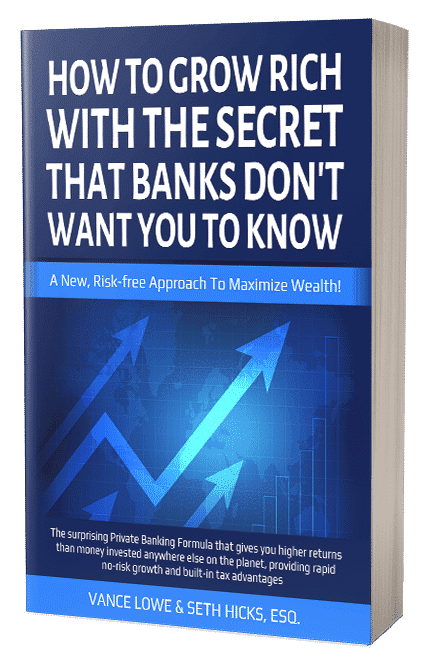
[00:48:31] Seth Hicks Esq.: Sure. Well, my learning process was, was long and arduous, and I’ve tried to condense that down for the people that this, this resonates with. And so my, my partner and I, we wrote a book and we, we offer that book to folks free and we like to call it a red pill book.
[00:48:50] Seth Hicks Esq.: And the title is What the banks Don’t Want you to know. And therein we lay out some real red pill issues, some of which we’ve [00:49:00] discussed. Mm-hmm. And some of which we haven’t. And some of the folks, they are like, yeah, I know this. And it helps substantiate their research. And some are like, it’s a brand new world to them.
[00:49:10] Seth Hicks Esq.: They, they have trouble understanding, you know, that the Dodd-Frank Act means that. The bank can bail in, but this book we, we give to folks for free on our website. It’s an offer for a free ebook, and if your, your audience comes in, I want them to make sure as they put their email in that they say they came from with Brandon and, and block cash.
[00:49:32] Seth Hicks Esq.: Mm-hmm. And, and that way, you know, we’ll know what their interests are and they can say, Hey, I’m specifically interested in, in this or something. You know, if there’s something that we’ve talked about and we’ve got a number of podcasts that we’ve produced that are all available there as well, I. That folks, once they get ahold of this, they begin to binge on, on the topics.
[00:49:53] Seth Hicks Esq.: But we’ve tried to really condense it down, Brandon, and make it a real simple path to follow so [00:50:00] that they don’t get bogged down and overwhelmed. The first place that they start is with the, the book, the free ebook. What the banks don’t want you to know. And then if that’s resonating with them, listen to a few podcasts that we’ve produced.
[00:50:15] Seth Hicks Esq.: And if, if they’re totally in, you know, resonating with what’s going on, they can schedule an exploratory call with our team and, and dig into how it would actually apply to them. So if you’ve got the small, you know, guy just outta college with the. 10,000 bucks and, you know, we, we lay out the, the plan of how it would work for him.
[00:50:36] Seth Hicks Esq.: And if you’ve got a multi multimillionaire that, that you know, is looking for asset protection and financial privacy, we lay it out for them. It’s called an eight year roadmap that we actually apply the system to them. And this is all at no cost to them. It’s really to let them take it on a test drive and see.
[00:50:57] Seth Hicks Esq.: Actually how it will work year after year for [00:51:00] them. How it changes their financial position and how it can benefit them. So that’s kind of our, our process that we’ve developed. Mm-hmm. For folks to help them, you know, dig into it without having major brain damage.
[00:51:15] Host: Gotcha. Yeah. Well, for everyone in the audience listening and watching, we’ll put some links in the description for the episode so you can easily find that stuff for the book, for in Anywhere.
[00:51:23] Host: You know, Seth, you wanna direct them, you know, just shoot over some of that stuff and we’ll, we’ll put some links together.
[00:51:29] Seth Hicks Esq.: Awesome. That sounds great. Yeah, I mean, our, our website is private banking strategies.com but I’ll, I’ll actually, we can put the, the book available right there for you if you want.
[00:51:40] Seth Hicks Esq.: And they can go straight to that link and make it as simple as possible for ’em. Be glad to do that.
[00:51:46] Host: Perfect. Alright, so I think, you know, we’ve gone for almost an hour. Anything you wanna wrap up on for this, it’ll probably be a two part episode series.
[00:51:56] Seth Hicks Esq.: Yeah, absolutely. I mean, I think we’ve got so much to [00:52:00] discuss, Brandon.
[00:52:00] Seth Hicks Esq.: Oh yeah. We’ve barely scratched the, the surface. You know, there’s so much more I think, to add for the specific cryptocurrency investor and things that we can dovetail in into that. I’d, I’d like to come back with you and, and kind of drill down there some more. But yeah, I’m just really grateful that you had me on and looking forward to some, some future discussions with you.
[00:52:24] Host: Absolutely. And thank you for taking the time too. You’re the one providing most of the, the content here on, on the episode, on the podcast. I think people are really gonna find this, not just enjoyable, but also very insightful because it’s not something I think most people hear every single day. Like there’s a lot of personal education, financial education out there, but this is much more specific.
[00:52:45] Host: Prioritizing, you know, preserving your wealth, building your wealth, saving that wealth, investing that wealth, and, and including crypto too, which I don’t think gets. Interjected as often as it should be nowadays now that it’s so popular and you know, most people in America [00:53:00] actually have it. So yeah. Thank you for sharing all this, you know, knowledge and wisdom.
[00:53:04] Host: You’ve been doing this for a long time and there’s no better person to talk to.
[00:53:08] Seth Hicks Esq.: Yeah. Thank you so much, Brandon. Appreciate
[00:53:09] Outro: it. Did that story feel like it was about you? Do you feel like you are generating a lot of revenue but are not moving forward as fast as you would like? Do you feel you should be making more progress toward your financial goals?
[00:53:24] Outro: Do you feel stuck? Let us help you get unstuck. Are you ready to take action and get your own private bank? Please call private banking strategies at (817) 200-4777 or visit us. Www private [00:54:00] banking.