

What Is Uninterrupted Compounding?
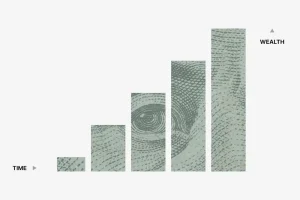
Compounding occurs when growth generates additional growth. The longer compounding continues without interruption, the more powerful the results can become.
Many financial strategies experience interruptions caused by taxes, market losses, withdrawals, or other events that reduce the amount of capital available to grow.
A properly designed private banking strategy is built around preserving the compounding process. Capital remains positioned to continue accumulating over time rather than repeatedly being diminished by external factors.
For business owners and investors who think in decades rather than quarters, uninterrupted compounding can become one of the most valuable wealth-building forces available.

How Do Dividends Accelerate Growth?
Participating whole life policies issued by mutual insurance companies may pay dividends when declared by the carrier.
When dividends are used to purchase additional paid-up insurance, they can increase:
- Cash value growth
- Death benefit growth
- Overall policy efficiency
- Long-term compounding potential
Dividends are not guaranteed, but many established mutual carriers have maintained long records of dividend payments through a variety of economic environments.
Over time, reinvested dividends can become an important contributor to total policy performance.

What Threatens Tax-Free Status?
Tax-free growth depends on proper policy design and ongoing management.
Several mistakes can jeopardize favorable tax treatment, including:
- Improper funding structures
- Excess premium contributions
- Violating Modified Endowment Contract (MEC) rules
- Poor policy design decisions
- Working with advisors unfamiliar with private banking strategies
The objective is to maximize efficiency while remaining within the guidelines established by current tax law.
A well-structured policy is designed to support long-term growth without crossing boundaries that could alter its tax treatment.

When Does Tax-Free Growth Outperform?
Many people compare financial strategies based solely on stated rates of return. That comparison often ignores the impact of taxes.
In many situations, a lower growth rate that remains tax-free can outperform a higher growth rate that is heavily taxed over time.
The advantage becomes more noticeable when:
- Holding periods are long
- Tax rates increase
- Investment gains are realized frequently
- Investors are in higher income brackets
- Capital remains invested for multiple decades
The true comparison is not gross return versus gross return. It is the amount of wealth ultimately retained after taxes.

What Mistakes Slow Growth?
Many policyholders unintentionally reduce long-term performance through avoidable mistakes.
Common examples include:
- Focusing on premium size rather than policy design
- Choosing products not intended for private banking
- Underfunding a policy relative to objectives
- Taking action based on short-term expectations
- Failing to understand how compounding works over time
The strongest results typically come from disciplined implementation and a long-term perspective.
Private banking is most effective when viewed as a strategic financial system rather than a short-term investment.

How Should Business Owners Evaluate Tax-Free Growth?
Business owners often evaluate opportunities based on efficiency, cash flow, and control.
Tax-free growth should be evaluated using similar standards:
- How much capital remains under your control?
- How much growth is lost to taxes?
- How predictable is the accumulation process?
- How accessible is the capital when opportunities arise?
- How well does the strategy integrate with business and investment activities?
A strategy that preserves liquidity while reducing tax exposure can create advantages that extend beyond simple rate-of-return comparisons.
The goal is to create a financial asset that complements business operations while supporting long-term wealth preservation.

How Do You Verify a Policy Is Built Correctly?
The quality of the policy design often determines the quality of the results.
Before implementing a private banking strategy, investors should carefully evaluate:
- The financial strength of the insurance carrier
- Whether the company is a mutual insurer
- The policy's cash value efficiency
- The use of paid-up additions
- Funding levels and long-term projections
- Compliance with applicable tax rules
- The experience of the professionals designing the policy
A properly structured policy is designed from the beginning to support liquidity, tax-free growth, and long-term compounding.
For many successful business owners and investors, the difference between an average policy and a banking-focused policy can be substantial over time.

Episode 172 – Why the Wealthy Control Money Instead of Chasing It
Most people spend decades trying to earn more money.Very few ever learn how money actually works. In this week’s Private Banking Strategies Podcast, Seth Hicks and Vance Lowe walk you through exactly what happens during your first 90 days of implementing your own private banking system.You’ll discover: Why financial education—not
Episode 169 – The Tailwind Effect of Private Banking
The average person spends money once. Banks recycle the same dollar repeatedly. That is the difference. The wealthy understand that the real power is not merely earning income — it is controlling the movement of capital. When families reclaim the banking function in their own lives: money continues compounding, liquidity

Episode 168 – Why Taxes Quietly Kill Compounding Growth
What if the greatest obstacle to building wealth isn’t your income… But taxation itself? In Podcast 168 of the Private Banking Strategies Podcast, Vance Lowe and Seth Hicks break down how taxes quietly destroy the power of compounding growth — and how properly structured private banking strategies can help families

Secure Your Future: Exploring the Benefits of Life Insurance Retirement Plans
A disciplined, contract-based strategy to protect wealth, create predictable tax-free retirement income, and preserve a lasting legacy. By Vance D. Lowe RFC, ChFC, CLU Most people who have done everything right financially still face a quiet but very real threat to their future. They have accumulated assets, built businesses,

Financial Strategy Unleashed: Harnessing Cash Flow Banking through Whole Life Insurance
A clear, strategic path for turning everyday cash flow into a private, tax-free banking system you control for life. By Vance D. Lowe RFC, ChFC, CLU The most powerful financial strategy available to business owners and investors today is hiding in plain sight. Properly structured whole life insurance, when
Summary of the book Becoming Your Own Banker by Nelson Nash
clear, practical overview of Nelson Nash’s Becoming Your Own Banker and how its principles create long-term security, privacy, and tax-free generational wealth. By Vance D. Lowe RFC, ChFC, CLU Taking control of the banking function in your own life is one of the most liberating financial decisions you can