[00:00:00] Intro: Welcome to Private Banking Strategies Podcast with Vance Low and Seth Hicks, your secret weapon to protect your assets and never have to start over financially again. Vance and Seth help high net worth individuals, families, business owners, and investors, structure and asset protected tax-free fortress for their families.
[00:00:21] Intro: Learn how to keep what you earn and use the velocity of money. To create your own private banking system. Join us on this journey as we explore the secret strategies of the rich and political elite and help you take total control of your financial security. Now onto the show.
[00:00:48] Seth Hicks Esq.: Hello, welcome to Private Banking Strategies with Vance Low and Seth Hicks Vance. How are you? I’m doing great today. I think we’ve got a good topic. Yeah, this will, this will [00:01:00] definitely be a multi-part series. One of the questions we often get from our clients and folks that are interested in private banking strategies is how do policy loans work?
[00:01:11] Seth Hicks Esq.: That’s how you access your cash value and your life insurance contracts. That is one of the fundamental principles for being able to. Be your own bank and to access your own cash that you’re building and engage in the banking equation, which Nelson know always said, you need to take the banking equation back in your life.
[00:01:34] Seth Hicks Esq.: So it’s a deep dive today folks, on how policy loans work, and it’s gonna be a multi-part series and just looking forward to it. I often compare this principle, this cornerstone, of being able to access your cash value as like the eighth wonder of the world like compounding interest. And we hear that is one of the great benefits and values that people utilize [00:02:00] this strategy for, wouldn’t you say Vince?
[00:02:02] Vance Lowe: I would back in the day when we didn’t have banks on every corner, uh, you know, we’d be lucky to have a bank in a territory. Life insurance served that purpose. It would allow us to store money and get access to it on a regular basis. And throughout the ages we’ve been able to, uh, use that cash value to plan ahead.
[00:02:28] Vance Lowe: It gives us a very stable. Platform to know what the end results are gonna be because of the guarantees and everything else, and we’ll get into to everything. But as an overall view, people families would put their money in these live insurance contracts because they could access the money whenever they needed without any problem.
[00:02:54] Vance Lowe: But it would also grow at a. Very competitive rate. I don’t know if [00:03:00] people know Seth, but the contracts, these whole life, these participating mutuals between the profit part because of ownership and the guarantees, it’s always stayed pace or beat the stock market. The net returns even today. It’s that case.
[00:03:20] Vance Lowe: It all long term, it always has because life insurance deals with the word yield versus average rate of return, and it yielded people, which means money put in your account. That cannot be reversed. The profits with a live insurance company of course, are not guaranteed, but in a yield. Atmosphere once money’s put into your account.
[00:03:46] Vance Lowe: If the life insurance had a bad year or the economy had a bad year, they can’t subtract anything. It’s your money.
[00:03:54] Seth Hicks Esq.: Right? And that’s, that’s one of the beautiful parts about it, is that this [00:04:00] capital that you’re building in your life insurance, it continues to grow and compound. Year after year, whether you pull it out in policy loans or whether you don’t.
[00:04:11] Seth Hicks Esq.: And that’s through the non-direct recognition policies and it’s, it’s a tool that you can actually have your money in two places earning. Income earning interest, bringing a return on the same dollar in more than one place. And let me just give a quick illustration of that. We’ve talked about this many times, especially with our real estate investors.
[00:04:33] Seth Hicks Esq.: If you’ve capitalized your bank, your life insurance contract with cash value, and let’s say that you, you have a hundred thousand dollars in cash value that you want to pull out and you want to purchase a investment real estate property like a duplex, and so you pay. Outright don’t have any other loan than the one that you created for your own banking system.
[00:04:55] Seth Hicks Esq.: And you pull out that a hundred thousand dollars from your, from your bank, and you [00:05:00] purchase that real estate and you get it rented up and you start getting a thousand dollars a door, you get $2,000 on that duplex. A month after pi. Everything is paid, so you’ve got your money in your policy and it’s growing at between average rate of four to 7%.
[00:05:19] Seth Hicks Esq.: Compounding as if you didn’t take it out and you’ve got the $2,000 a month in rental cash flow coming back into your possession, which you then cycle back into your bank. That’s called the velocity of money, and that’s a really simple example, but it’s a very strong one that illustrates the concept of being able to have your money in two places that’s earning for you at the same time
[00:05:42] Vance Lowe: you see Seth.
[00:05:43] Vance Lowe: I don’t think people understand in general what money is. How it works or how you use it. Because society before the early 19 hundreds, people didn’t spend money. They used money just [00:06:00] like the banks use money today. When the banks took over, they switched us and out of ignorance actually, to spending our money, our capital, our principle.
[00:06:11] Vance Lowe: When we go to work and we go through that whole process, the money we bring home as principal, we’re not supposed to spend any of it. Right. But we can use it. Right? How do you use it and, and live and not spend it? You get it back. You put it to work, you use it, you get it back. It’s called multiple touches on the dollar, which we want to go into.
[00:06:32] Vance Lowe: So Seth, you said another thing in your example, and I just wanna throw a question out because some people might ask, you know, when they have a hundred thousand dollars. In cash value in their policy, and they decide they’re gonna go sell finance or sell purchase something. How many copies of tax returns do they need to give to the life insurance company?
[00:06:55] Seth Hicks Esq.: Zero. Why? No, there’s, because there’s no [00:07:00] nosy inquiry as to what you want to use the funds for or why, or check your credit or any type of due diligence, it’s effectively. How much do you want and where do you want it soon?
[00:07:13] Vance Lowe: Just those two questions. I’ve always found that amazing. In today’s society and in today’s world, folks, this is the most fun, refreshing way to live life and self-finance if you can get it going.
[00:07:29] Vance Lowe: But we all have to start. Another thing, Seth, that when we get into business and things like that, everybody thinks that banks are responsible for the statistics of business. How long it takes to make a profit, this, that, or the other. That’s not, so it’s all stems from life insurance and how long it takes for life insurance.
[00:07:54] Vance Lowe: Cash value to kick in a new startup company averages three to seven years. [00:08:00] It’s the same average for cash value to to kick in only we’ve figured out a way to start that immediately right up front. Lemme give a good example. You and I go into business together, we’ve got the perfect idea and we’ve just finished the budget, and we gotta come out of pocket $25,000 a year to pay all the expenses for the business and keep the doors open.
[00:08:25] Vance Lowe: Under that scenario, people are expecting to do that for three to seven years before any type of profit is seen outta that business. And it’s so refreshing when I get to tell people or we talk to people, how do you know if you could pull back, you put 25 uh, thousand dollars in? What if you could pull back 60% of that and be able to use that immediately in year one?
[00:08:50] Vance Lowe: Did we have a pretty good startup company? And then it just goes up from there. It doesn’t reverse it. It gets to over a hundred percent. So I think that’s phenomenal. [00:09:00]
[00:09:00] Seth Hicks Esq.: Yeah, it absolutely is. And that’s why, you know, some folks have called it the eighth wonder of the world, you know, and ultimately we’re talking about financial.
[00:09:11] Seth Hicks Esq.: Freedom. We’re talking about financial security and flexibility, and that is a reason that people utilize private banking strategies. There’s really no other financial vehicle that comes close to giving you these same advantages. And if there are, I, please tell me folks, put ’em in the comments.
[00:09:31] Vance Lowe: For my whole career, I’ve talked to people about what the perfect investment is.
[00:09:37] Vance Lowe: Everyone that hears this, we challenge you. Write down all the things that you would think that a perfect investment would do for you realistically. Okay? I mean, there’s some weird things out there, but if you’ll honestly do that, you’ll find this contract will fulfill every one of them. It is the perfect investment.
[00:09:59] Vance Lowe: [00:10:00] One more thing I’ll lay on the table as, as we can discuss it further on, is that our environment out there right now is not very friendly. You know, government’s really trying to take control and turn our country. Uh, I know it’s socialistic now, but they wanna go further than that. What if we don’t wanna participate?
[00:10:18] Vance Lowe: What if we were to create our own environment, our own. Mini economy, which another word would be our own mini town, because that was the education that was lost independency, the family unit, being able to survive on its own. Okay. That’s also what we’re talking about here.
[00:10:40] Seth Hicks Esq.: Right. Financial freedom and security, that flexibility and the autonomy to be able to, uh, take the banking equation back, uh, in your own family system.
[00:10:53] Seth Hicks Esq.: What does that mean? Take the banking equation back. Well, it’s exactly like we just described. It’s funding your own cash [00:11:00] value your own capital through your life insurance contracts, and then using that cash value. For investment, for all the, for retirement, for the, the things that people generally just have one touch on that dollar for.
[00:11:18] Vance Lowe: Let me do a little bit deeper dive in the bank. ’cause sometimes Seth and I know what we’re talking about, but sometimes people don’t understand putting the baking equation in your life. Let’s just do this. Let me share how simple this concept is. We know that the banks out there always get the money back a hundred percent of the time.
[00:11:42] Vance Lowe: They get the money back through collateral, whatever it is. Even bad loans, they still get the money back. So they’re always growing. They’re never shrinking and there’s no. Free money Tuesday or Thursday. They don’t give away free money. So [00:12:00] what we mean when putting the banking equation back in your life is all new income coming in under your control literally gets put into your banking system first, and then it goes to work from that point so that it can return.
[00:12:17] Vance Lowe: That’s what we mean. Without that bank, you cannot do that process. You are always gonna be living. The problem that we show people, we call it a open horseshoe economy, where we only get to use a dollar once and it it can never come back. Nelson Nash, we preach. You’ve got to put the banking equation in your life.
[00:12:39] Vance Lowe: You’ve got to have that link to put the money in and then disperse it to work. With strings and chat so that it always comes back.
[00:12:49] Seth Hicks Esq.: Right? Yeah, that’s right. Well, that’s a great explanation and I think drives home the point. I wanna kind of shift into some after that [00:13:00] overview, a few drill down questions, because this is gonna be kind of a drill down.
[00:13:05] Seth Hicks Esq.: Mm-hmm.
[00:13:06] Seth Hicks Esq.: An anatomy of policy loans. Let’s just start on the top. What is a whole life insurance policy loan? And what are the benefits of that?
[00:13:16] Vance Lowe: Okay. A lot of people are a little bit confused at this, and agents really perpetuate the confusion when we go to borrow money from our policies. And I understand that because the, the person who wants money, you know, it’s easily explained, but it doesn’t quite work the way they think.
[00:13:40] Vance Lowe: When you go to borrow from your cash value, you can only borrow a certain amount to up to a hundred percent depending on the company, but normally it’s less than that. Seth, you can give the statistics in a minute here, but we do not borrow our actual cash. Just like Seth [00:14:00] said earlier, our cash is always working for us.
[00:14:04] Vance Lowe: Even when we borrow money, we borrow the money against. Cash value. It’s called cash reserves. It’s the cash reserves of the life insurance company. And what entitles us and puts us to the front of the line is that these contracts make us owners of the insurance company. And as such, we can, you know, like I said, go to the head of the line.
[00:14:29] Vance Lowe: We get preferred loans and we can’t steal from our company. Okay, we’re gonna go to the cash reserves that they could easily take out and get interest on. So we’re gonna pay an interest on that money and collateralize the cash value we have working for us. The cash value is still there. It’s still growing at the guaranteed rates.
[00:14:53] Vance Lowe: It’s still gonna get credited, the profits, and we borrow the cash reserves of the life insurance. That’s [00:15:00] how we get double amounts. And insurance carriers are more than willing to do that because it’s a hundred percent. Cash reserved. They already have the money there to pay off the loan, and they will always have the money there to pay off the loan, but that allows us to take that money and put it to work.
[00:15:19] Seth Hicks Esq.: There’s no other more secure loan that could be made. I mean, you’ve got lenders making loans with 80% that they contribute to a purchaser’s purchase of real property, and sometimes they still. Get upside down depending on which way the market moves. We’ll compare that to the insurance company loans they’ve, they’ve got their cash value and the death benefit that they’re gonna pay out, so that is their collateral.
[00:15:47] Seth Hicks Esq.: And that’s why there’s no questions asked. Let’s drill down on this a little bit. So some folks call that, uh, living benefit. Like it’s really not about the death [00:16:00] benefit and the policies where you’re going to be paid to lump sum on the insured’s life for the heirs, although that is a value and that is a part of the analysis, but it’s not the main focus for banking.
[00:16:13] Seth Hicks Esq.: And so we’re creating these systems and strategies for living benefits and building up the cash value for investment for purposes that you need to live and to fund retirement.
[00:16:28] Midroll: Did that story feel like it was about you? Do you feel like you are generating a lot of revenue but are not moving forward as fast as you would like?
[00:16:38] Midroll: Do you feel you should be making more progress toward your financial goals? Do you feel stuck? Let us help you get unstuck. Are you ready to take action and get your own private bank? Please visit us at www.privatebankingstrategies.com.
[00:16:59] Seth Hicks Esq.: What would [00:17:00] be one of your main golden rules of why to take money out and for what?
[00:17:06] Seth Hicks Esq.: Purposes. Do you have any guidelines for folks on what the appropriate use of your cash value is?
[00:17:15] Vance Lowe: I would believe the most preferred loan is one that we pull out from our policy that we have capitalized in advance and to access that money through a loan. Only through a loan can we pay it back. There’s other accesses to your cash value, but, and you can have the money, but you won’t be able to put it back.
[00:17:39] Vance Lowe: And that’s not for discussion today. So let’s just say I need a car. I’m just starting out, you know, I don’t have a car to trade in. I need an uh, a car. I’m gonna go set a budget. It’s gotta, uh, be within that budget and I find a great deal. I can then go to the, uh, [00:18:00] insurance carrier and immediately have wi money transferred into my account or wired to me.
[00:18:07] Vance Lowe: Very, very quickly within, you know, let’s call it two days or or less, to have those funds needed for that account or for that project, for that car. Now all I have to do is set myself up a system that I’m comfortable with because now I’m in control of that loan and the insurance company is not expecting that money back, by the way, that’s why they don’t ask any questions.
[00:18:33] Vance Lowe: It’s your money. But the prudent rule and what we need to understand, it gives the person a way to discover multiple uses on a dollar. If I pay it back, then as that money comes back in, it’s reusable and I still have the car as it comes back. Hopefully we can do one project, then another, then another, and are.
[00:18:58] Vance Lowe: Volume [00:19:00] of return in payments coming back is ever increasing and we start to discover, ah, this is what money’s for. And then we can get into velocity a little bit. But it all stems from the use of money from a policy through a policy loan. So automobiles are are great. Other things that people use are for education, for electronics.
[00:19:27] Vance Lowe: Any number of things, just be aware that you’re borrowing the money you want to pay it back. So, Seth, let me ask you, I don’t know if it’s, it’s in our deep dive or not. What do what? What type of return do we want on our own loans? What do we want to make and why do we wanna make anything?
[00:19:47] Seth Hicks Esq.: Right? Well. As a banker, you need to shift mindset and to, to think like a banker, you’re interested in cash flow and sometimes we ask [00:20:00] this question and analyze this issue with folks, are you interested?
[00:20:03] Seth Hicks Esq.: Are you interested in. Just the interest rate or is it the volume rate of return? And we compare those dynamics. And so as a banker, you want the highest interest rate that you can, that you formulate in the, in the loan. And when you’re paying yourself back, especially into a, a tax free. Economy, like the life insurance contracts are, you want to pay back as as much interest as you can fit into your cashflow.
[00:20:32] Seth Hicks Esq.: And so for example, we could use a high interest credit card balance. Let’s say someone’s holding $30,000 on a high interest credit card at 24%, but they’ve got $30,000 in their life insurance contract. What should they do, Vince? What would you, what would you counsel them to do?
[00:20:52] Vance Lowe: Man, I’d buy that debt in a heartbeat.
[00:20:56] Vance Lowe: I would borrow the money going interest rate with the life insurance [00:21:00] carriers is about 5%. Okay? But I’m making, you know, on the average 7% on the same dollars. So I’m gonna take that 30,000 and I’m going to buy that debt. My little lending company’s gonna buy the debt. So to the outside world, it’s like paying it off.
[00:21:18] Vance Lowe: No, I’m buying the debt. ’cause what I want is the volume of return and I’m gonna take that 35% or 24%, whatever it’s gonna be. ’cause I can get it tax free. ’cause I’m using after tax dollars. I’m putting it to work inside my economy. I’m charging myself this amount of money. So how do you handle the question, Seth?
[00:21:43] Vance Lowe: When we borrow money from our life insurance, when they find out, what do you mean I have to pay interest? Why would I want to charge myself interest?
[00:21:51] Seth Hicks Esq.: Because you’re building your, your cash value, you’re building the ability to finance future investment, future [00:22:00] car purchase, or acquisition of high interest debt that you have, or even replacing real estate mortgages.
[00:22:07] Seth Hicks Esq.: So that interest that you’re paying on top of principle into your banking system is money that can be used again immediately. And it’s also compounding and growing year after year at a preferred rate.
[00:22:22] Vance Lowe: So we’re running an economy, folks, this is what Seth and I are talking about. Policy loans are one of the most essential thing to that operation.
[00:22:33] Vance Lowe: Money has to move in order to have any value, and so you’ve got money sitting. We also call the policy a money warehouse. We hold our money there until we can put it to work and. See banks, they don’t let money sit overnight in their account, in their banks. It’s called overnight lending. It goes forward every two hours all the way around the globe, back in their accounts in the morning.[00:23:00]
[00:23:00] Vance Lowe: We have to do the same thing. Money has no value unless it’s exchanged. And how many times can it exchange in a day is called velocity. So these loans allow us. To purchase something, set up our own terms. You know what if I set up, uh, Seth on my car payment, I borrow $20,000 and I’m paying $500 a month, and all of a sudden I find it way too tight.
[00:23:29] Vance Lowe: Am I hosed? Am I stuck?
[00:23:31] Seth Hicks Esq.: No.
[00:23:32] Vance Lowe: Why?
[00:23:33] Seth Hicks Esq.: Because you’ve got access to cash value in your bank,
[00:23:36] Vance Lowe: but also. I am the owner and the controller of that loan, couldn’t I reset and redo that loan down to a payment that I could afford?
[00:23:46] Seth Hicks Esq.: You can modify loan transactions as you see fit because you’re effectively the banker and the borrower
[00:23:54] Vance Lowe: and, and when people start the process, I take ’em through my experiences.
[00:23:59] Vance Lowe: I [00:24:00] probably made every mistake in the book trying to set up my own self banking. I had to refinance my own stuff three or four times just to get it right, just to get the balance right. But, uh, thank goodness for an opportunity to have loans. And guess what? These loans are private. Nobody knows what’s going on here.
[00:24:20] Seth Hicks Esq.: Right. So the question that, that I posed that we started to answer was, what are the best uses for your banking cash value, for the value that you’ve built up? What are the best uses? And we talked about things that you are gonna have to have in life, like automobiles. We’ve talked about an investment, like a real estate investment, or it could be any type of investment that is creating, uh, a return.
[00:24:47] Seth Hicks Esq.: On that investment and building cash flow that you can then service your own loan that you’ve created. Another big one is retirement.
[00:24:57] Vance Lowe: Yes. Yes. Be [00:25:00] prepared though, folks. You’re setting up a bank, a company, so you’ve gotta have the capitalization in there and it has to be what we call seasoned and producing at a more than a hundred percent rate for money that’s going in, but.
[00:25:16] Vance Lowe: Eventually that 7% or that amount of money coming out will be so significant that we could withdraw that or we could borrow that, uh, and do that for retirement, help replace income at retirement. We also don’t like to say the word. Retirement very much. I know everyone’s keyed into that because we’re an entitlement society now, but there’s no such thing as retirement.
[00:25:46] Vance Lowe: And I would pose the question out there to people. Seth, does a town retire, say, money still has to circulate. It’s whether you want it to run out. And I’ve dealt my whole career. [00:26:00] With the fear that almost all people have because they switch out of production to what they consider as retirement, and they start spending their nest egg.
[00:26:11] Vance Lowe: I think that was created by government to get that nest egg. If they don’t have it now, they want it. And the fear is, am I gonna outlive it? Well, this philosophy we’re talking about handing to people. Let’s say somebody retires as a million dollars in the account when they check out of life, it’s probably gonna be closer to six to 9 million.
[00:26:31] Vance Lowe: It’s not gonna go down. It’s gonna ever increase, even with you doing your portion because you get the money back.
[00:26:39] Seth Hicks Esq.: When we use the word retirement in this context, we’re really talking about just cash flow for sunset years that you want to be able to access. I mean, some people plan with the use of government sponsored programs, and we’re gonna get into that a little bit further in our, in our podcast.
[00:26:59] Seth Hicks Esq.: But [00:27:00] just like you said, this is a never ending type of cycle and strategy that just builds and continues.
[00:27:08] Vance Lowe: There’s a great example guys of retirement in Nelson Nash’s book, becoming Your Own Banker. The whole pro process was financing cars. If you just finance cars in this example, it will, it will build a retirement, a replacement of income for you at a certain age that you can’t outlive, and you’ll still pass on more than you ever put in the thing or took out to heirs.
[00:27:35] Vance Lowe: It’s just unbelievable when you put all the powers of what money really needs to be doing, you organize it correctly, you’re gonna get the
[00:27:44] Seth Hicks Esq.: production. So let’s move into another question then. H how much can you borrow from your life insurance contract and when sometimes you hear folks that are, are. Are really mistaken about [00:28:00] how it operates and say, well, you, you can’t access any money the first two years.
[00:28:04] Seth Hicks Esq.: And that’s just not true when it’s properly designed and structured the way we structure it. So tell folks a little bit more about that.
[00:28:13] Vance Lowe: Well, we have to go with the understanding that we’re putting a system together. When we purchased, uh, this type of a contract, it’s long term, it’s lifelong. It should never be looked at short term, and you can’t look at it like a deposit account in a bank.
[00:28:33] Vance Lowe: Okay? If I put $10,000 in a bank. Then I could write checks off of it and get the whole $10,000. That’s not what we’re talking about here. We’re talking about putting a company together or a little bank together that will exceed that $10,000 over time. Okay, so it takes a little bit of time and how much money can you actually access?
[00:28:56] Vance Lowe: That’s easy for our clients. We have everyone call Myra [00:29:00] our assistant and or call the toll free number at that insurance company and just ask the question. They’ll ask you for your policy number and they’ll immediately say you have available X. Even when we have policy loans out, Seth, there still could be access to money.
[00:29:18] Vance Lowe: Okay. ’cause we didn’t borrow the whole thing, or we made another premium payment, or they added the dividend part. Okay. The profits after we borrowed it, so that may still be available, get more money. So it’s whatever’s in the account according to the structure. They like to leave a little bit extra in there for next year’s interest.
[00:29:41] Vance Lowe: On the law, outstanding laws if you haven’t got ’em paid off.
[00:29:44] Seth Hicks Esq.: Right. So, but it’s, it’s accessible from the very get go when the policy is structured and, and it continues to be available to you, like you said, from dividend payments and the policy loans that you pull out. It’s [00:30:00] still growing as if it weren’t taken out.
[00:30:02] Seth Hicks Esq.: Here’s
[00:30:03] Vance Lowe: why. Let, let’s just tell people why that’s available so fast. Okay. Insurance industry. Because that was the monetary system of our country. Everything is annualized. If you pay an annualized premium, you get the best of everything. Annualized means they pay the earnings upfront at the beginning of the year, not at the end.
[00:30:29] Vance Lowe: Most other investments, everything else, you don’t get anything until it is earned because it’s in the rears. So Seth and I structure these contracts so it creates the highest content, the highest dollar amount for a client that’s reasonably possible for long term. I would caution people. As you look on the internet, you’ll see other people out there pretending to do these same type of [00:31:00] contracts, and they talk about percentages and splits in the different components that make up the premium.
[00:31:07] Vance Lowe: All they’re after is a quick sell and they’re gone. We’re after helping people change their lives, learn about money, and put a banking equation in their life, so right. That’s important to, to make that little statement, but that’s why the cash is available. It just takes long enough for the account to get open and registered in the insurance company’s computers, and it’ll register what is available right then, and you can have access to it.
[00:31:37] Vance Lowe: It’s that fast.
[00:31:38] Seth Hicks Esq.: Let’s take another angle on the policy loan repayments and building like a high interest rate. Let’s say that we borrowed that a hundred thousand dollars out of our bank that I used in the real estate example, and we buy that investment property and it’s paying us $2,000 a month on that a hundred thousand [00:32:00] dollars.
[00:32:00] Seth Hicks Esq.: If I set up a, a, a 10% interest, who benefits from that interest? And, and we talked a little bit about why a higher interest rate benefits us, but let’s drill down on that a little bit more and, and explain who, who ultimately benefits from the interest payment and why.
[00:32:20] Vance Lowe: Let’s do this type of analogy so people can understand, and this is the way I break it down.
[00:32:25] Vance Lowe: There are two people. There’s you who are, is in control. You know where you want to go. You know what you’re doing. You know you want your money to grow. Then there’s a counter you and you meet him every morning and they look back at you in the mirror. That person looking back at you, the in the mirror is in a contra world, okay?
[00:32:47] Vance Lowe: He’s not you. He’s doing things that you want to capitalize on. So be that as it may. This is the one that we’re gonna borrow money or lend [00:33:00] money to, and he’s going to pay it back. Because the two things that he does, he loves to spend money and he loves to go to work to support his habit. Okay? So he’s a consumer.
[00:33:12] Vance Lowe: We are growers. So we have to split ourselves. And this is the best analogy for me to do that. So when we borrow money, we wanna put it to work. If we put it to them and we charge an interest and we get that interest, where’s that gonna go? That’s gonna go back to us. Okay? And it’s in an environment, in an economy that is triggering absolutely no taxable events because there’s no new cash coming in under our control.
[00:33:43] Vance Lowe: It’s the reuse of the same cache within our own environment. It also makes the
[00:33:49] Seth Hicks Esq.: life insurance company healthier. With cash flow, cash reserves that they pull together and it increases their ability to pay higher dividends. [00:34:00] Would you agree? Yeah,
[00:34:01] Vance Lowe: absolutely. Owners can’t steal from their own companies. You got to be honest.
[00:34:06] Vance Lowe: And you don’t get any discounts.
[00:34:08] Seth Hicks Esq.: So Nelson Nas describes this as owning a grocery store and having. Your wife load up groceries, do you go out the back door and load ’em in your truck or do you go through the front and pay for ’em and, uh, the answer is you pay for them because the, the profit margin there is necessary that you need to, to pay for, or you have to pay for like 17 cans of peas, so to speak.
[00:34:34] Seth Hicks Esq.: You don’t take walk the peas out the back door. You pay at the cash register.
[00:34:41] Vance Lowe: So that’s important to realize, folks, is that you’ve got to be honest with yourselves. All of you hearing this right now, maybe for the first time, is that you’re being robbed blind. As we talk, as you listen to this, that guy in the mirror is living in your house.
[00:34:59] Vance Lowe: He’s [00:35:00] eating your food, he is driving your car, bringing it back empty, using your utilities, wearing everything out free, because we haven’t been taught better. Okay. It’s just like me knocking on your door, showing up with my suitcase. Hey, I’m now gonna check into your house. I wanna live here for free. Eat all your food, drive your cars, bring ’em back empty.
[00:35:23] Vance Lowe: How long are you gonna let me do that for free? I would say, I don’t think I could quite get turned around before that door slams. They’re not gonna put up with that. This is the problem we have to fix. We teach people always how to get a hundred percent of the money back.
[00:35:42] Seth Hicks Esq.: I think this is probably a good place to end this podcast on how policy loans work, and I’m gonna give folks a roadmap real quick about how they can find more resources on our website@privatebankingstrategies.com.
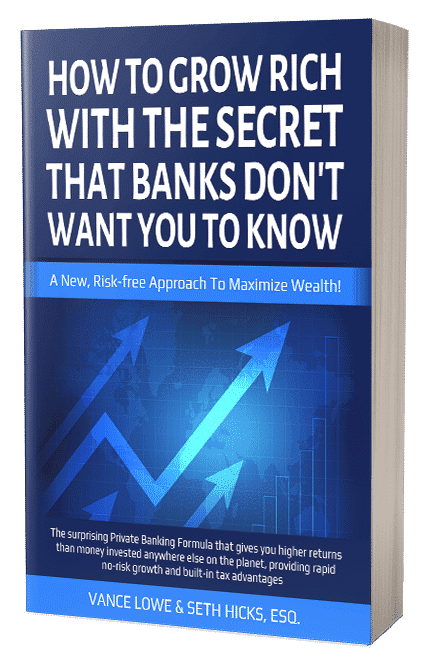
[00:35:57] Seth Hicks Esq.: That’s private banking strategies.com. [00:36:00] If this is the, the first time you’re hearing this podcast, we have a free book offer. It’s what the banks don’t want you to know. Secrets the banks don’t want you to know. That will help you immensely in creating the private banking strategies that we teach people.
[00:36:15] Seth Hicks Esq.: And you put your name and your email in on our website, and that book becomes available to you by PDF or by audio version. We’ve also got the audio version of it. You can listen to it on the go if you listen to that, and this podcast is making sense. The next step is to schedule an exploratory call with Vance.
[00:36:33] Seth Hicks Esq.: What you’ll find a link to his calendar in the emails that we send. So that’s a pretty quick walkthrough on our process. Vance, any closing remarks on this podcast?
[00:36:44] Vance Lowe: I just think money is something people need to educate themselves about. We all think we know something about money, and my closing, uh, comment would be a quote from r Nelson Nash.
[00:36:58] Vance Lowe: It’s not so much what we don’t [00:37:00] know about money that’s hurting us. It’s all about what we think we know about money that’s incorrect.
[00:37:07] Seth Hicks Esq.: That’s exactly right. Well, thanks folks for tuning in with us. We hope to have you back again on the next podcast. Bye-bye.
[00:37:17] Outro: Did that story feel like it was about you? Do you feel you should be making more progress toward your financial goals?
[00:37:25] Outro: Do you feel stuck? Let us help you get unstuck. Are you ready to take action and get your own private bank? Please visit us at www.privatebankingstrategies.com. Thank you for listening to the Private Banking Strategies Podcast. Click the subscribe button below to be notified when new episodes become available.