[00:00:00] Intro: Welcome to Private Banking Strategies Podcast with Vance Low and Seth Hicks, your secret weapon to protect your assets and never have to start over financially again. Vance and Seth help high net worth individuals, families, business owners, and investors, structure and asset protected tax-free fortress for their families.
[00:00:21] Intro: Learn how to keep what you earn and use the velocity of money. To create your own private banking system. Join us on this journey as we explore the secret strategies of the rich and political elite and help you take total control of your financial security now onto the show.
[00:00:48] Vance Lowe: All right, Vance, welcome to the show. Thank you very much for having me today. I’m just really excited to be here.
[00:00:54] Host: Absolutely. Absolutely. Well, we like to start with the difficult questions here. What’s your favorite ice cream? [00:01:00]
[00:01:00] Vance Lowe: You know what? And it’s very hard to find. For me. I like chocolate Almond Fudge chocolate.
[00:01:06] Vance Lowe: Almond Fudge. That’s a new one. I like it. And it’s hard to find, but, oh, I
[00:01:10] Host: love it. So you’re in Texas. Are you a Blue Bell guy then? Yes, I am. So I lived in Austin, Texas back in like, oh gosh, 2000 14, 15, 16 timeframe. Mm-hmm. And I re, do you remember when they had the Blue Bell shortage crisis? Oh yes. Because something got contaminated and you couldn’t get it
[00:01:29] Vance Lowe: anywhere.
[00:01:30] Vance Lowe: Absolutely. And that, so that was kind of devastating for everybody. Some places still don’t carry it because of that.
[00:01:37] Host: Mm. That’s a shame because Blue Bell, I think is one of the best ice cream brands out there.
[00:01:42] Vance Lowe: It really is. It really is. Tell our listeners, what’s the scoop? What do you do today? Well, I help people put back the banking equation back in people’s lives.
[00:01:53] Vance Lowe: What that means is we work really hard for our money and look what’s happening out in the world today. [00:02:00] You know, government’s going crazy on us. The spending, you know, is outta hand and inflation is now spiraling. I don’t think they’re telling us the truth very much on anything. And so when we make money, we have to make it count.
[00:02:14] Vance Lowe: And so right now money is filtering through our hands. We earn it. We have to pay tax on it, so we have to earn a lot more than we net. That’s a sad thing. And then we only get to spend it once. Well, I’m here to tell people you can spend it more than once ’cause you can get it back. Just like the banks. I think everybody will agree.
[00:02:36] Vance Lowe: The banks always get the money back. And all we have to do is understand and learn a strategy. We can do the same thing. But you know, my mentor years ago, r Nelson Nash told me it’s not so much what you don’t know about money that hurts you. It’s all about what you think you know about money that’s [00:03:00] incorrect.
[00:03:00] Vance Lowe: And now we’ve got the herd mentality. Everybody thinks they’re doing it right because they’re all doing the same thing. And I’m here. You’re here to tell him, it’s not only wrong, but it will be 180 degrees opposite of what you think. And this is so fun. You know, I was getting ready to retire 18 years ago.
[00:03:21] Vance Lowe: I told my partner when I brought him in, he was gonna make me rich someday. And we’d enjoyed a money management firm. 17 years running, never. Really had any losses. 2000, 2008 really dipped down. Okay. We weren’t able to get the earnings that, that we needed to, but in 2008, the end of 2008, a client walked in my office, gave me a book, and royally screwed up my life.
[00:03:54] Vance Lowe: Have you ever had, you know, a, a whole paradigm shift? The whole shift has to change now. He [00:04:00] gave me r Nelson Nash’s book, becoming Your Own Banker, and as a money manager and a strategist to help, you know, fluent clients retire financially independent. We were very successful doing that, but we really had to spend a lot of time, and the unknown factor was the market, because the market out there, that means the money goes away from us.
[00:04:22] Vance Lowe: We have to depend on other people. Guys, I’m here to tell you, you don’t even have to do that anymore. You can make twice, three times the amount of return tax advantage and never take any risk except for that guy or that gal looking back at you in the mirror. If they’re shady characters, then we all got problems.
[00:04:43] Vance Lowe: Yeah, so that’s what I do. I just love doing it.
[00:04:48] Host: So I, I wanna talk about this idea of infinite banking and for our listeners out there, they know I’m a fan of this. I have several policies. I leverage it to do my investing in, in building my, my investment portfolio. But take [00:05:00] us back to reading the book for the first time.
[00:05:02] Host: So for maybe our listeners out there, can you explain, be your own banker? Tell us a little bit about the book, what it states in there, and we’ll go from there.
[00:05:10] Vance Lowe: In Nelson Nash’s book, he covers five issues. We have to defeat almost every day. One is called Parkinson’s law and he goes through that law and it’s about living a luxury or a luxury.
[00:05:25] Vance Lowe: One luxury. Once experience becomes a necessity. Okay, so we, we over relive, we over overindulge ourselves in many things in life and are not able to set aside the money that we need for retirement. So. We have to defeat that we have to live on less than we bring home. Okay, the next one, golden rule. Now, if you’re a religious person, everybody has the definition on the golden rule, but it’s not true in the banking world.
[00:05:58] Vance Lowe: He who [00:06:00] has the gold makes the rules and there’s a great story in there. And then he goes on to talk about use it or lose it. So. People we’re gonna learn something brand new about money. And if you don’t put it to work and replace the way you used to think, then you fall prey to your old habits and you’re gonna repeat the same things.
[00:06:22] Vance Lowe: And the best way to check you, I, we all do it over the last five years, are you where you want to be? If that answer is no, something has to change. You can’t keep repeating. Same thing over again and get a different result. You have to change something, replace it. Same thing with a bad habit. You have to replace it with a good habit.
[00:06:43] Vance Lowe: So we’ve got Willie sut in-law. You know Willie Sutton was a famous bank robber. And the reason that’s in there is because as soon as you start making money, somebody’s gonna try to take it away from you. The IRS. So we’ve gotta have some type of tax strategy. [00:07:00] And so those rules and those laws are absolutely critical that we defeat those.
[00:07:07] Vance Lowe: If you can defeat them, you’re gonna win by default ’cause no one else can. Then there’s a grocery store story. The reason that’s in there is because we cannot steal from ourselves. If we create our own bank, then we have to do the same things that clients do in our bank. If we borrow money from our bank, we don’t get a better rate.
[00:07:30] Vance Lowe: As a matter of fact, you know, we should charge ourself more ’cause we’ll earn more money. One more thing that he, or two more things he points out in the book, were really critical. It’s called imagination. Think of a little child as they’re growing up. When they get excited, they just about explode, don’t they?
[00:07:52] Vance Lowe: They, mm-hmm. It’s unchecked. Then when a clap of thunder hits and they don’t understand the vision of [00:08:00] terror in their minds, just cripple ’em. They literally fall to the ground because their imagination is unchecked. Over the years, we’ve learned how to tame that, haven’t we? That’s to our dis dismay, so to speak, or demise or however you wanna put that.
[00:08:17] Vance Lowe: So imagination is critical and it’s all about how we think. There’s a different way to think about everything. That pretty much encompasses the book. There’s charts, there’s illustrations, there’s all kinds of things. I use that book with my clients. I tell ’em, that book is your resource book. As you learn the concepts, you then will find it in the book and you’ll swear it’s not there.
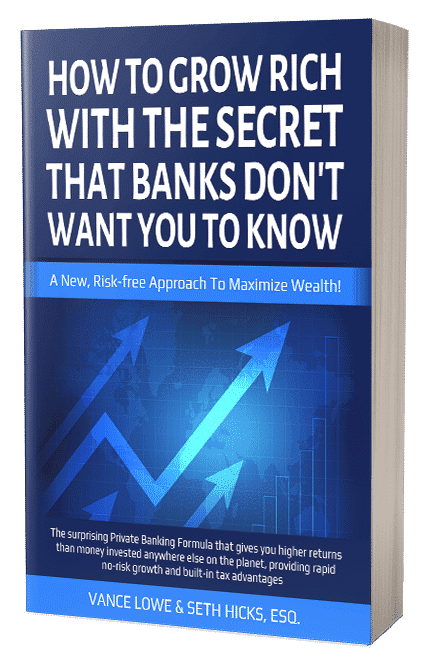
[00:08:43] Vance Lowe: So that, that’s the book. So. We really use that a lot. We usually introduce our little book ’cause our little book is online. It’s just a download. People are, are free to to, to look at. It kind of tells our story and then it leads straight into Nelson Ashley’s book. [00:09:00] So I hope that answers that question.
[00:09:03] Host: Yeah. So I remember the first time I read the book, I honestly didn’t understand it. It took me two or three times to really sit down, read it word for word. Try to think to your point about imagination of the ways that I could apply the concept. In terms of my investment portfolio, and then it started to click, and the reason why it didn’t make sense to me is because it’s against the money principles that we’re taught, right?
[00:09:26] Host: Which is give your money to someone else, let them grow it. Don’t touch it for 40 years, and then when you want it in 40 years, there will be more there. It, it talks about ways you can efficiently use taxes and control your money more than anything. So I, I wanna tap into the story of the grocery store because I think that’s one of the best examples of how he uses to explain the concept and that lesson that he teaches in the grocery store is that if you’re going to be your own bank, that you have to be an honest banker.
[00:09:56] Host: So can you tell us a little bit about the grocery store example and kind of what the, the [00:10:00] lesson is there?
[00:10:01] Vance Lowe: What we’re talking about there is that we, it goes back to an outside. Idea. We finance every single thing we purchase. Most people don’t believe that. Most people have been taught, including me, from my parents and my mentors.
[00:10:19] Vance Lowe: The best way to get through life is to pay cash for everything. Not only wrong, it’s 180 degrees wrong. Now, a lot of people will disagree with that because they don’t have to pay outside, um, interest but. They’re totally forgetting about the inside interest they would lose because they disobey a principle.
[00:10:42] Vance Lowe: There’s three principles we have to obey. One’s called the 10% rule, the other one is called, and there’s two parts to this part. A, never ever spend principle. Part B, don’t ever contemplate breaking rule number one. [00:11:00] And then working off a well-designed financial plan. People choose not to obey these three and wonder why they can’t make it.
[00:11:09] Vance Lowe: So if in the grocery store story, it is about putting your principle to work and getting it back, it’s all about what the value is. He talks about what happens if one can appease, gets stolen. How many cans of peas does that take to replace? I think it was like 26 or 27 cans of peas just to break even. So if our spouses go in and shop and they go out the back door, instead of going to the check stand, then that’s a loss to the store and it’s, it’s almost impossible for the store to make up, but other people will walk.
[00:11:50] Vance Lowe: That person go through the back door and, and the employees will feel like, well, I’m entitled, and that store will never reach its potential. Branch it [00:12:00] out. Now you have a, a, a metal shop, or you have a woodworking shop, you have any other type of business. If you think you can get that product at wholesale or free, you’re doing yourself a total de Your business will never get there.
[00:12:15] Vance Lowe: So that’s why that story’s in there is you can’t steal from yourself.
[00:12:20] Host: Yeah, it really talks about leakage in your own personal economy. Mm-hmm. Right? And so this idea of you finance everything you buy essentially comes down, in my view of when I buy a car for $25,000, then, then I lose the ability for that $25,000 to be invested in a real estate portfolio, to be invested in a certain stock market.
[00:12:39] Host: Whatever it is, I lose the ability for that investment to grow. So I do have lost opportunity cost. And so when I read that story around the peas, it’s like, okay, we buy these peas for 30 cents, we sell ’em for 33 cents. If one of them goes missing, then I have to sell 10 cans of peas just to break even on that one that went [00:13:00] missing.
[00:13:00] Host: So it’s this idea of uninterrupted compound and how can you put your money to work uninterrupted for the longest amount of time?
[00:13:09] Vance Lowe: Why don’t we share with the audience. Exponential compounding. This is where the bank’s mentality is. This is not the average thinking out there, but I think I can make this crystal clear.
[00:13:20] Vance Lowe: Okay. And give everyone an experience of why banks lend money. It isn’t about interest rates, so I just found out that you still have a car payment and the outstanding balance on your car payment to pay it off was $10,000. Okay? Let’s say for some crazy reason, the interest rate is 10%. Okay? And your monthly payment is $500.
[00:13:51] Vance Lowe: Vance Low lending institution would buy that debt in a heartbeat. Why? Why would we buy that? What do [00:14:00] you think the audience is gonna say?
[00:14:03] Host: Because it a consistent income stream.
[00:14:05] Vance Lowe: Well, the 10%, you know, I’m gonna make 10%, right? Yep. Yep. So let me change that number from 10% down to 1%. And it doesn’t change my enthusiasm for buying that debt.
[00:14:19] Vance Lowe: It’s not about the interest rate. So now there’s only two numbers left. My $10,000 to buy the debt and the monthly payment. So let’s walk through this. Let’s just do the math. There’s no growth factor or anything else here. Okay, 500 times 12 is 6,000 per year, right? Mm-hmm. So if I buy, if I take my $10,000 and put it to work, buying your debt, I’m going to receive $500 per month or $6,000 per year.
[00:14:53] Vance Lowe: If I divide my volume of return, the $6,000 by my money at work, [00:15:00] that’s a 60% volume rate of return. Is that high enough? Yeah. What if it totally tax free. Yep. Now, do you want your earnings on that high or low? High? You want it as high as you possibly can. Yeah. So you could charge yourself 25%. Right. And still keep the payment at $500.
[00:15:22] Vance Lowe: ’cause you don’t care how long it pays off. What you care about is how long do you want that to last? It’s not about getting the 10,000 back. It’s about getting. All the money back on the cars you spent. See, you can either say, I’m kissing it off, it’s worthless to me or guys, people world. I was just kidding.
[00:15:42] Vance Lowe: I want all that money back. Yep. And this is the motivation. This is how we do it. It’s about volume of return. So when somebody refinances a mortgage for quarter to point thinking, oh, look how much better off I’m gonna be, they hose themselves so bad. It’s, it’s, it’s irre [00:16:00] recoverable. You, you shouldn’t refinance.
[00:16:03] Vance Lowe: If you’re at a 15%, you can’t, you know, unless you’re gonna live in the home and die in the home, okay? It’s because you’re always gonna return back to payment number one.
[00:16:15] Host: Mm-hmm.
[00:16:15] Vance Lowe: So if you’re at a 3% loan, it’s gonna cost you 96% interest. Well, wait a minute, I’ve got a 3% loan. No, you have a 96% loan. Have you calculated when they’re gonna get to 3%?
[00:16:33] Host: Yep. Yeah. It’s the
[00:16:34] Vance Lowe: very last payment. It’s only the last payment in year 26. There’s still over 26% interest that they’re paying.
[00:16:43] Host: That that really changed my mind on thinking about debt in general and refinancing is the fact that really the first seven years of a 30 year mortgage is when the bank makes all their money.
[00:16:53] Host: Because your payment of $500 in this situation, 490 of it is going to interest. $10 [00:17:00] is going to principle, and around seven years, it’s like two 50 and two 50. So they’re like, Hey, let’s refinance you. You can get a lower rate, your payment will go lower, but all of a sudden you just reset the clock of how much money you’re giving away.
[00:17:14] Host: And so, go ahead. And
[00:17:15] Vance Lowe: we’ve just taught the public why interest rates fluctuate because they, they turn about on the average every five to seven years, right? They have to either move, get a new home sell, or they refinance it. So mortgages have to go up and down. Now, what’s happening in government the last.
[00:17:32] Vance Lowe: Decade, you know, has kind of screwed things up, but that’s really hurt the economy. It hasn’t helped it at all.
[00:17:38] Host: Right, right. And I think there’s this concept, what changed my mind is, let’s use this car example. For example. When I buy a $10,000 car and I give it in cash or take a bank loan against that car to pay that debt down, then that money is going to someone else.
[00:17:55] Host: Where if I borrow it against my infinite banking policy or my [00:18:00] own bank, then all of a sudden, yes, I’m going, there’s gonna be a cost of capital there, right? You are gonna pay more than $10,000 ’cause there is an interest rate, but that money is going directly back into your bank for you to access again.
[00:18:12] Host: Where if you spend it with a bank loan with Bank of America or pay cash for it, that money is gone. All you get is that car.
[00:18:19] Vance Lowe: So you can make easily the same profits that the bank banks. Now there is a problem because the banks and, and we should make sure if you haven’t done this already, I believe the banks are and have been completely unethical for a long time.
[00:18:34] Vance Lowe: I actually believe the United States fought a war in 1900 and we lost the Federal Reserve was born and have taken over our country and run it from the shadows ever since. And that’s in the book. What is Creature of Jekyll Island? Mm-hmm. Everybody should read that. So they, they understand what we’re under and, and, and the effect of it today.
[00:18:57] Vance Lowe: So that’s our only hope is to [00:19:00] get back the information they don’t want us to have. It. They cannot control this. There are no taxable events inside your personal economy.
[00:19:12] Midroll: Did that story feel like it was about you? Do you feel like you are generating a lot of revenue but are not moving forward as fast as you would like?
[00:19:22] Midroll: Do you feel you should be making more progress toward your financial goals? Do you feel stuck? Let us help you get unstuck. Are you ready to take action and get your own private bank? Please call private banking strategies at (817) 200-4777 or visit us at www.privatebankingstrategies.com.
[00:19:50] Host: So let’s try to level set just in case we’ve lost some listeners out there.
[00:19:54] Host: A, what are we talking about when we’re talking about it being your own bank? What kind of policies, et cetera? [00:20:00]
[00:20:00] Vance Lowe: There’s a special contract that existed when the pilgrims came over and insurance companies were created because of the banking need. It wasn’t, it was life insurance. Yes. But it was still because of a different needs, and so it was participating.
[00:20:16] Vance Lowe: Mutual whole life insurance companies that were created and born and were owned by the policy holder. So that’s critical is that you get ownership and that in today’s now, a lot of things ha have evolved. You look at Nelson Numbers in his book and they don’t quite correlate today, but the theory’s still there.
[00:20:38] Vance Lowe: It doesn’t matter whether it could be higher or it could be a little lower. He’s teaching correct principles, which are what I really love. But so 18 years ago, we were on a campaign of going to all the mutual companies and seeing if they wouldn’t bring back what created them and if they had [00:21:00] stock divisions, it was no good.
[00:21:02] Vance Lowe: Mm-hmm. Great contracts like New York Live, Northwest Mutual, metropolitan, all of these, they have great contracts, but they do not, and they hate. IBC and you’ll actually get investigated for money laundering. ’cause it’s the same scenario. You’re, you wanna move money out, move money back, move money out, move money back because it’s the perfect money warehouse.
[00:21:28] Vance Lowe: You can store money there and get market above market returns even, even today, even though they, they’ve lowered the guarantees. But on top of that, you make profits and it’s the safest pla place on the plant to store your
[00:21:42] Host: money. So that’s what we use. A couple different factors here just to make sure we’re level setting with everyone.
[00:21:49] Host: One, it’s a whole life policy. It is not a term policy. Two, it is a mass mutual company, which mean not the, not the company, mass Mutual. It’s a, it’s a mutually owned [00:22:00] company, which means that if it’s on New York Stock Exchange, we’re not talking about that. Then three, it has to be properly structured. So there’s a lot of different debate out there talking about term versus whole life and why term makes more sense than whole life, and for 70 to 80% of the time, I agree with that argument.
[00:22:17] Host: That term makes more sense than whole life. If you are trying to buy life insurance. If you are a rent life insurance, if you’re trying to implement an IBC policy, then it has to be properly structured. Which means that we are going to reduce the death benefit as much as possible and try to stuff as much cash into the vehicle as possible.
[00:22:38] Host: So, did I miss anything there? Just to make sure we’re talking about the same thing.
[00:22:41] Vance Lowe: I am so grateful that, that you said that people listen to what he just said. There’s two, I call it the pornography of IBC. There are groups out there, they just pedal policies and they’ll give you all kind of different combinations and splits.[00:23:00]
[00:23:00] Vance Lowe: Beware of those who push index Universal. Any index or any universal life is a hybrid term contract with increasing rates. It has no guarantees. They’ll argue with that saying, oh, well there’s a guaranteed rate. There’s no gar guarantees that the prices aren’t going up, and there’ll be no money there at death.
[00:23:25] Vance Lowe: And, and the early ones, all of them that I know of. Have have blown up. I don’t know of many people unless they’ve died young. It’s,
[00:23:36] Host: it’s funny you say that because I was listening to this conversation the other day that was talking about like Universal and Index Universal are so new to the market that now that we’re starting to see the back half of those policies, they’re starting to fail out.
[00:23:48] Host: I wanna give an example for our listeners to kind of conceptualize this. So when I talk about properly structured, we want to shoot for 80 to 90% cash value accessible within the first year with a [00:24:00] break even term around seven years. Now, this is where I think people get lost in this IBC concept because they say, wait a minute.
[00:24:09] Host: I spent $25,000 for this policy, and I only showed 24,000, $23,000 of cash value after year one. I’m losing money on it. First of all, no, you’re not, because if you die that day, that first year, you’re gonna get a million dollars death benefit and you paid $25,000 for it. 25,000 a million dollars back on $25,000 is a pretty darn good investment.
[00:24:31] Host: I think we can agree with that. And two, it’s, it’s not meant to be an investment. It is a warehouse vehicle. And I, I think you and I are so aligned on the fact that I use it for big chunks of capital that flow through my economy as a place to set it, let it grow 4% and still have access to it, but still have some of the benefits, like asset protection, no taxes, and then a death benefit at the end.
[00:24:58] Vance Lowe: Let, let, let’s have the [00:25:00] people look at it one other way, you know? In a startup company where all the statistics come from comes from life insurance and the experience mm-hmm. Of how life insurance, so if you and I were gonna start a business and you just said 25,000, we do all the math, we do all the, the budget and everything else.
[00:25:17] Vance Lowe: We decide we’re gonna have to invest from our own capital $25,000 a year to keep the doors open. Well, how long does a new startup company take to make a profit?
[00:25:27] Host: Mm-hmm.
[00:25:29] Vance Lowe: Average of five years if it makes a profit? Yeah. Three to seven years. Well, in our company, if we could pull out 60% in year one, did we make a profit?
[00:25:41] Vance Lowe: I mean, did we have a good startup year in year two when we put money in? If we could pull out 75%, are we headed in the right direction? Now, if I could show you a guaranteed investment that in year five. Every dollar you put in, you’re gonna make a dollar 10 to a dollar 20, or you’re gonna be over a hundred [00:26:00] percent efficient.
[00:26:00] Vance Lowe: How many of those do you want? Yep,
[00:26:02] Host: as many as I can get.
[00:26:03] Vance Lowe: So the break even we that we do is five years and we don’t tell, we don’t care about the people other than be the, I mean, we care about the people. We don’t care about what other people say about the policies. As long as we can start banking immediately.
[00:26:23] Vance Lowe: And we find that a little bit lower than what you just mentioned gives you a much faster break even point instead of maybe seven or eight years. In year five, we actually draw part of the premium in year five. Which is the paid up additions writer because we found a laddering effect. There’s just all kind of, you know, things that we, yeah.
[00:26:46] Vance Lowe: This is where we get
[00:26:47] Host: creative.
[00:26:47] Vance Lowe: Yeah. We can get creative and that’s not, you know, right now all, all we want to share with, I guess with, with the clients is there’s a better way than the way you’ve been doing it. Yeah. If you can get the money back, you can use it [00:27:00] over again and you don’t have to pay tax on it all over again.
[00:27:03] Vance Lowe: Every person who spends a dollar. They think they gotta go earn a dollar to replace it. That’s not true. They gotta earn two to $10 if you’re an entrepreneur. Mm-hmm. Because you gotta pay all that overhead.
[00:27:16] Host: Yep, yep. And so I, I really try to equate it to people that flip houses out there typically understand this concept a little bit better.
[00:27:24] Host: And why? Because they, one, are paying an exorbitantly high cost of their capital. Some of the fix and flip private money that I do, we underwrite for two. So meaning if you take a hundred thousand dollars loans, you $2,000 just to get the access to that money, and then I’m gonna charge you 12% interest 1% a month until you pay me back that money.
[00:27:44] Host: And so what I try to shape the mind of is if you flip a home and make a hundred thousand dollars profit. Go put that in a policy that’ll grow 4% a year, and now you have access to 90,000 of it. It’s not full hundred thousand, but you at least have access to a [00:28:00] majority of it at a rate cost of capital of 5% versus the 12% you were paying and recycle that money.
[00:28:06] Host: So now you’ve taken that 90,000, you’re putting it in a new flip all while the a hundred thousand is still growing at 4%. Did I miss anything there or anything you wanna add there?
[00:28:16] Vance Lowe: No, what’s happening to us right now, and I’m, I’m, it’s not that I’m concerned, it’s still the absolute safest place on the planet, but this year, statistics as far as deaths and what government has done on our, uh, the vaccination life insurance rate, catastrophe, catastrophic events, kinda like a, a war notice, you know, def cons of 1, 2, 3, or whatever.
[00:28:44] Vance Lowe: The worst they’ve ever charted was a four a level four and two months ago, one America come out, which is America United, came out and said, we’re experiencing [00:29:00] a level 16. Oh, wow. It’s in, it’s incalculable. It’s 400% more in deaths, mainly young. Our, our workforce is. Decimated already. We’re losing almost 70,000 workers per month in the United States.
[00:29:21] Vance Lowe: So that’s why the reason for the shortages and things like that, everything’s kind of broken. This is the safe haven. This is what we can count on. As a matter of fact, the banks have sold all their own stock, the owners and guess where they put their money? Mm-hmm. And life insurance. Absolutely.
[00:29:39] Host: Yeah, there’s an interesting study out there that talks about how much tier one capital, so in a bank you have to have liquid, liquid access in your quote unquote tier one capital.
[00:29:50] Host: Meaning if things go to heck, we’ve got this money sitting right here that we can access. I, I forgot the study, but is, isn’t it like 10 or 20% of a bank’s tier one capital is [00:30:00] actually in whole life policies. Mm-hmm. Yeah. ’cause it’s a safe place. So. If you want to be your own bank, follow what banks do. The first thing they do is stuff their cash reserves into these types of policies.
[00:30:10] Vance Lowe: And, and see, it’s not audible. It, it’s private. They can borrow just like everything else. It, it is. I did this study with the Bank of America in 2017, $9 billion for their executive bonus retirement program in premium annually. Yep. And when the guys die, they don’t get the policies when they retire. Bank cash is anywhere from five to $7 million on the death of their employee.
[00:30:39] Host: Yep. Yep. I think the, the fact that you brought up Audible and not showing up on a personal credit report is a big thing for entrepreneurs and specifically real estate, active real estate investors as well. So I’m going through a process right now of buying a new home, and the one thing that when they pulled my credit report is they’re like, oh my gosh, you have all this debt out there.
[00:30:59] Host: Your debt, [00:31:00] DTI ratios are way outta whack and things like this. So our cost of capital to you to buy a home, even though you have great income and all this rental income and all this kind of stuff is going to be higher because you have all this debt out there. Whereas in a policy, it is private between me and the insurer.
[00:31:18] Host: So it’s a private contract, so it never shows up on our credit report. And not only that. We have gotten very used to easy capital over the past five years where I can walk into any bank at any time and get a line of credit or money. And I think as liquidity suck gets sucked out of the system and as we get constrained here, those easy lines of credit are not going to be as easy as they once were.
[00:31:41] Host: And this policy. When written correctly is a guaranteed line of credit from the insurance company that I can access at any time, no questions asked. So if I text my insurer right now, within two days, I’m gonna have money in my bank account, and I think that’s an often overlooked. [00:32:00] Aspect of whole life.
[00:32:01] Host: When people say, oh, there’s a cash drag on it. Oh, you only make 4%. Where the stock market is making 20% last year, it’s down 19% this year. And they’re not looking at all these other factors of it. So I I, I’ll stop there before I go on my tangents here and just say anything you wanna add there?
[00:32:19] Vance Lowe: No. That life insurance companies and, and with these contracts, we get preferential treatment because we’re owners.
[00:32:26] Vance Lowe: We get to go to the front of the line. They do ask two questions. How much do you want? Where do you want it sent?
[00:32:32] Host: No,
[00:32:33] Vance Lowe: there is no payback folks, there’s no questions about paying the money back. Okay. You know, if you’re borrowing it so you have access to it, you can borrow, put it back, or you can actually take some money and not put it back.
[00:32:47] Vance Lowe: And there’s, there’s all kinds of different ways to do that. Yep. Yep. So this is really exciting and like you, when you first read the book. For me, I had a little bit different experience. I [00:33:00] started reading the book at nine o’clock at night. I did not get any sleep that night and neither did my wife, ’cause I kept poking her.
[00:33:08] Vance Lowe: The more I read the angrier I got, ’cause I had been looking for this my entire lot and everything was clicking for me. But by morning I had a feeling of depression I couldn’t overcome. Where was this? 30 years ago. I’ve missed the boat. I’m too old for this, and it spurred me to call Nelson the very next day and he answered the phone and the rest was history.
[00:33:34] Vance Lowe: He just laughed. He says, I’m not laughing at you, but you have every opportunity that a young person has. Just not quite as long.
[00:33:42] Host: Mm-hmm.
[00:33:44] Vance Lowe: Yeah. How, how many policies do you personally have? I have 14 there. It’s, yep. And, and I’ve been doing this for 18 years. And I’m just now closing on number 15.
[00:33:58] Host: I, that’s one, one of the things I just wanted [00:34:00] to highlight, ’cause when you find people, I, I mentioned I have a couple of policies and when you find people that are really interested in this and they fully understand the concept of how to leverage this to maximize their returns and take control of the banking aspect of their life and control of their money, you’ll find that they sometimes have a dozen, if not a couple dozen policies out there.
[00:34:19] Vance Lowe: Nelson Nash, the, the, the guru he signed me to, which is Ray Petite, back 18 years ago, had 153 policies that he owned. Wow. He had been practicing for 25 years and he was adding three new policies a year in banking. If you can’t put the money to work, then you buy, you expand your bank. So those are the concept.
[00:34:43] Vance Lowe: This is simple folks. It, it may, we probably make it more complicated than it really is. It doesn’t even take me, and I don’t think it takes you very, it doesn’t take me 20 minutes a month to run this complete concept with all five companies paying the bills, you [00:35:00] know, and, and squaring everything. It doesn’t even take 20 minutes.
[00:35:04] Host: Yep. Yep. Well, this is fantastic. I wanna switch this now into our last round, though. We’re calling this the Five Toppings. Our first one is, I think I might know the answer to this, but what is your favorite book, or what is a book that you’ve read recently that’s given you a paradigm shift?
[00:35:18] Vance Lowe: Well, of course, Nelson N’s book, becoming Your Own Banker.
[00:35:21] Vance Lowe: I can’t tell you how many times I’ve read it. I actually memorized it. I was required to, because every time I ask a question, I’d get slapped, you know, figuratively speaking. What does it say on page 28? Click And they’d hang up on me and I’ll be darned. There’s the answer. And then, but lifelong, you know, I’m a Christian.
[00:35:42] Vance Lowe: Everything else, I would say the most meaningful would probably be the Bible. ’cause every, every time I change the aspect of life, I could read the same verse and it means something different. So yeah, I guess
[00:35:54] Host: another book where all the answers are already in there, if you just look hard enough,
[00:35:57] Vance Lowe: right.
[00:35:58] Host: Our second one is, I [00:36:00] believe the person you become 10 years from now is directly correlated to the habits that you have and the things you do every single day.
[00:36:05] Host: What are some of the habits that you have?
[00:36:08] Vance Lowe: I am highly competitive. I’m 70 years old. I get up and workout every day, and I do precision competition. I do long range shooting, and I do archery. Archery. When I started it, I always thought grew up that it was a sport. It is not a sport. It is a discipline, so I practice that almost every day.
[00:36:34] Vance Lowe: So I try to keep my body in shape. I’m very active. I have a, a ranch. I only work three days a week now, and this really isn’t work. It’s a passion that I have. And then I, I, I tend my, my ranch and I’ve got a woodworking, a business that I, I love to be in and do work with my hands, so. That’s what I do every day.
[00:36:54] Host: I’m sure there’s a lot of meditation to that too. ’cause you have to calm your mind, calm your body, lower your heart [00:37:00] rate to be able to precision shoot. Is that true? Oh,
[00:37:02] Vance Lowe: absolutely. You have to know like archery’s absolute best discipline. You have to see the arrow hitting the edge before it releases, and then it has to release on its own.
[00:37:15] Vance Lowe: You cannot release the string, you cannot release or it won’t hit it. It’s your subconscious, so you learn all about how powerful that is. Interesting,
[00:37:26] Host: interesting. Our third one is, what’s the best piece of advice you’ve ever received?
[00:37:33] Vance Lowe: I think my dad told me and my dad and I never had a, a very good relationship all growing up, but at the end when I, I went into the service and I, I served a, a two year church mission, but when I went into the service, he said, son.
[00:37:50] Vance Lowe: Life. Life. If you pursue stuff you love to do, if you’ll find something that you always want to do, you’ll love to do it. [00:38:00] You’ll never have to work a day in your life. And I, I was, I was blue collar all the way through. My dad was Geneva steel worker, and so I pursued money and I just loved it. I immediately learned that I have got to get everybody else what they need.
[00:38:18] Vance Lowe: Mm-hmm. Exactly what they need and my needs are taken care of. And it’s always been that way. And right now I’ve got an absolute passion on this. This stuff that everybody wins. There’s no losers except if you steal from yourself. You can’t blame the market. You can’t blame government taxes, anything. And the little illustration I just showed you, that compounds your money every two and a half years.
[00:38:47] Vance Lowe: Every two and a half years. How successful is that? How, why would you need to to do much else? Real estate is critical though, folks. I am, [00:39:00] you know, I drank that Kool-Aid a long time ago. I think you have to have those type of hard assets. Yeah. You just do.
[00:39:08] Host: Our fourth one is what is the thing that you’re most proud of in your life?
[00:39:13] Vance Lowe: My family. I have four children. And I think you work where you have to, you live where you want to and you raise your family. I’ve always been able to focus, I, I see so many people just going after the dollar, you know, their, their marriages fell and maybe I’m lucky or anything else, but I’m more in love with my wife today than I was 47 years ago.
[00:39:41] Vance Lowe: I got married when I was 24. And luckily we’re, we’re still together. We’ve had our, of course, everybody has their ups and downs, but four great children, 10 grandkids. So my family, what I do here is, is to help other people. So that’s my [00:40:00] best accomplishment is, you know, the low line might continue on after we, I love it.
[00:40:07] Host: I love it. Well, our fifth and last one is, if you could sit down and eat a bowl of ice cream with anyone dead or alive, who would it be and why?
[00:40:16] Vance Lowe: Well, I’m so enthralled with Nelson Nash. I would pick his brain every chance I got, and he downloaded to me a lot of stuff, but it, it wasn’t hardly scratching the surface.
[00:40:33] Vance Lowe: You know what I iceberg looks like I got the tip. So Nelson would be good. I would rely. I also like to sit down and have more conversations with my father because like I said, growing up we didn’t have a very good relationship at the end. We had a great relationship, but uh mm-hmm. That’s time under the bridge, so
[00:40:56] Host: Yeah.
[00:40:56] Host: And for those of you that don’t know Nelson, go [00:41:00] YouTube some of his talks because by gosh, he has the best accent I think I’ve ever heard in my life. And we were joking about it beforehand. So that would be a fun conversation.
[00:41:08] Vance Lowe: He is such a pure. Honest individual, you know what his best job is? If, if you were to ask that same question, what’s that?
[00:41:19] Vance Lowe: He was a Sunday school teacher.
[00:41:21] Host: Mm-hmm.
[00:41:21] Vance Lowe: He taught a Sunday school class every Sunday. He just loved it. Yeah.
[00:41:29] Host: Vance, fantastic conversation. I obviously, I think our listeners know I’m a huge fan. Mm-hmm. Of the policy and the work that you’re doing over there. If our listeners wanted to reach out to you and learn more about what you have to offer and the ebook that you mentioned earlier on your website, where’s the best place we could point them?
[00:41:44] Vance Lowe: Okay. We also have an eight year analysis. You can actually take it for a test drive without any type of commitment, so you can see your results over an eight year period along with not doing the strategy. Private banking [00:42:00] strategies.com. That’s all one word, private banking strategies.com. On there, you can download our free book.
[00:42:08] Vance Lowe: You can look at all of our podcast and the best thing to do is do your own reading first. Convince yourself. Most people, we, we do an exploratory call and most people tell me right up front, Hey, I’m already sold on this. I just need to know how it works. Let’s take it for a test drive. If there’s enough information, don’t get lost in the pornography out there.
[00:42:30] Vance Lowe: Go to Nelson NA’s website or our website. I promise you my whole dedicated life, everything on that website. Is factual and honest and there are no projections. Perfect. Thanks for coming on. Thank you so much for having me. I really
[00:42:46] Midroll: appreciate you. Did that story feel like it was about you? Do you feel like you are generating a lot of revenue but are not moving forward as fast as you would like?
[00:42:58] Midroll: Do you feel you should be [00:43:00] making more progress toward your financial goals? Do you feel stuck? Let us help you get unstuck. Are you ready to take action and get your own private bank? Please call private banking strategies at (817) 200-4777 or visit us at www.privatebankingstrategies.com.